Are Cockroaches Najis (Impure) in Islam? Religious & Scientific View
Many people wonder about tiny creatures in their homes. This common question touches both faith and cleanliness. We explore what Islamic tradition says about these insects.
Different scholars have various opinions on this matter. Some texts mention specific rulings for different situations. We look at these views with respect for all traditions.
Modern science also helps us understand health risks. Cockroaches can carry germs that make people sick. This knowledge combines with religious guidance for practical solutions.
Our goal is to provide clear information for daily life. We want to help families maintain pure homes while following their beliefs. Professional services like Super Dream Pest Control in the UAE offer expert help for pest-free living.
We delve into the religious and scientific perspectives on ‘Are Cockroaches Najis (Impure) in Islam? Religious & Scientific View’ to provide clarity.
Key Takeaways
- Islamic scholars have different opinions about insect impurity
- Classical texts provide guidance for various scenarios
- Modern science shows health risks associated with cockroaches
- Practical solutions exist for maintaining purity in homes
- Professional pest control services can help achieve cleanliness goals
- Balance between religious teachings and practical hygiene is important
- Knowledge helps make informed decisions about home cleanliness
Understanding the Concept of Najis in Islamic Law
Islamic teachings place great emphasis on cleanliness as part of faith. This foundation helps believers maintain both physical and spiritual well-being.
We explore the principles that guide Muslim households worldwide. These concepts form the basis for daily practices and decisions.

Defining Impurity in Islamic Jurisprudence
Classical jurists developed detailed systems for identifying unclean substances. They categorized different types of impurity with specific purification methods.
These categories include:
- Liquid substances requiring specific washing procedures
- Solid materials needing removal and cleaning
- Animals and insects with particular rulings
- Contaminated surfaces requiring purification
Early scholars based their opinions on Quranic verses and prophetic traditions. Their work created a comprehensive framework for Muslim communities.
The Significance of Purity in Muslim Worship
Physical cleanliness directly connects to spiritual readiness. Muslims must achieve a state of purity before performing prayers.
This requirement demonstrates how faith integrates with daily life. Maintaining clean environments supports religious obligations and personal devotion.
Understanding these concepts helps implement proper practices. This knowledge prepares us for discussing specific cases involving household insects.
Religious Perspectives: Are Cockroaches Considered Impure?
Islamic jurisprudence reveals fascinating diversity when addressing household pests. Various legal traditions developed distinct approaches to these common situations.
Scholarly Differences on Insect Impurity
Traditional schools of thought show significant variation in their approaches. Early scholars based their opinions on detailed study of sacred texts.
Some jurists considered certain insects inherently impure. Others focused on practical considerations and health implications.
This diversity reflects the rich intellectual tradition within Islamic law. Different communities adopted various approaches based on their circumstances.

Maliki School’s Position on Cockroaches and Other Insects
The Maliki tradition offers particularly interesting perspectives. Prominent scholars like Ibn Hajib provided clear guidance.
In his work Jami’ Al-Umahat, he stated:
“Vermin are edible and are slaughtered in the same manner as locusts. And if they fall into a pot, it would be permissible to eat from it.”
Abu Al-Barakat Ahmed Al-Dardir expanded this view in Ash-Sharh Al-Kabeer. He specifically mentioned permission to eat various creatures including these household pests.
This approach demonstrates how some classical thinkers viewed these animals differently. Their ruling considered both textual evidence and practical reality.
Practical Rulings: When Cockroaches Fall in Water or Food
Practical guidance exists for common household situations. Modern fatwa institutions continue this tradition of providing clear answers.
Darulifta Jamia Binoria Aalamia addressed a specific scenario:
“If roaches fall in a tank of water, this will not cause the water to become impure. For this reason, there will be no harming in drinking this water.”
This position finds support in Hanafi scholarship as well. Classical texts like Al-Bahr Al-Ra’iq note that death of creatures without flowing blood doesn’t impurity water.
The prophetic tradition about flies falling into food provides additional basis. This hadith suggests that small insects don’t necessarily make substances unusable.
| School of Thought | Position on Insects | Practical Ruling |
|---|---|---|
| Maliki | Generally permissible when properly slaughtered | Food remains edible if insects fall into it |
| Hanafi | Varies by specific insect type | Water remains pure if insects die in it |
| Shafi’i | More restrictive approach | Typically requires disposal and purification |
| Hanbali | Case-by-case determination | Depends on specific circumstances and insect type |
This comparative view helps understand the range of Islamic perspectives. Each school developed its ruling through careful study and interpretation.
Modern believers can consult knowledgeable authorities for specific guidance. Contemporary fatwa bodies continue to address these practical questions.
The diversity of opinions enriches our understanding of Islamic law. It shows how different communities applied principles to their daily lives.
Scientific View: Health Implications of Cockroach Contact
Modern research provides valuable insights into household pest management. We explore how scientific understanding complements traditional perspectives.
Health experts have identified significant risks associated with these common household visitors. Their findings help us make informed decisions about home cleanliness.
Disease Transmission and Health Risks
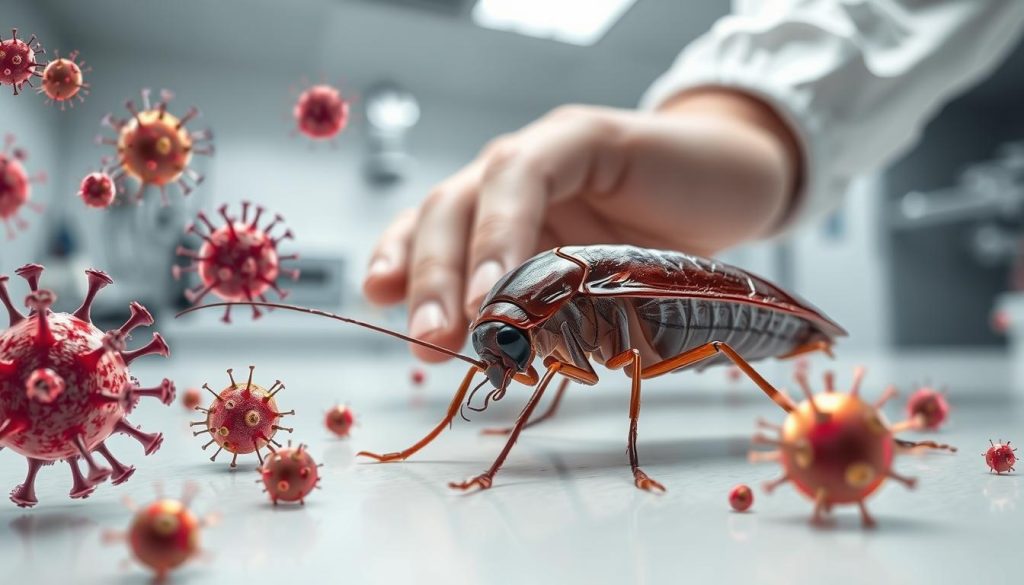
Medical studies reveal troubling facts about these crawling creatures. They can carry a surprising number of harmful microorganisms.
Research shows these pests transmit pathogens through multiple routes:
- Direct contact with food preparation surfaces
- Contamination through fecal matter and saliva
- Spread of allergens through body parts and shed skin
These transmission methods create serious health concerns. Proper prevention becomes essential for household safety.
Modern Scientific Understanding of Insect-borne Pathogens
Contemporary science has dramatically advanced our knowledge. We now understand the full scope of health threats.
Studies identify numerous dangerous substances carried by these pests:
| Pathogen Type | Specific Examples | Health Impact |
|---|---|---|
| Bacteria | E. coli, Salmonella | Gastrointestinal illnesses |
| Viruses | Enteric viruses | Various infections |
| Parasites | Various protozoa | Digestive system issues |
| Allergens | Saliva and body parts | Asthma and allergic reactions |
These organisms can contaminate food, water, and household items. The risk extends to personal belongings like clothes and bedding.
One research paper notes:
“These insects mechanically transmit pathogens from contaminated environments to food and surfaces, posing significant public health challenges.”
This understanding highlights why professional intervention matters. Services like Super Dream Pest Control & Cleaning Services UAE provide essential protection.
Scientific evidence supports proactive measures against infestation. This approach maintains health standards regardless of other considerations.
Modern knowledge confirms the importance of pest management. It complements traditional views with contemporary health insights.
Conclusion: Balancing Religious Guidance and Practical Considerations
Our exploration reveals thoughtful approaches to household insects. Various scholars offer differing rulings based on textual evidence and practical wisdom.
Modern health knowledge about diseases must inform our choices. Even when certain substances aren’t considered religiously problematic, cleanliness remains paramount.
We recommend consulting local jurists for specific fatwa guidance. Their knowledge helps navigate this question with proper religious context.
Professional services like Super Dream Pest Control & Cleaning Services UAE provide effective solutions. Their work supports both spiritual purity and physical wellness in homes.
This balanced manner respects tradition while acknowledging contemporary health realities. It represents the thoughtful approach many scholars throughout history have taken.