Can Bed Bugs Become Resistant to Modern Pesticides? – The Future Threat
Over the years, bed bugs have made a concerning comeback across the globe. These tiny insects have developed a strong resistance to many chemical treatments, making infestations harder to control. This growing problem is especially alarming in urban areas and travel hubs like the UAE, where dense populations and frequent movement create ideal conditions for their spread.
In the UAE, Super Dream Pest Control & Cleaning Services has been at the forefront of tackling these resilient pests. Their advanced techniques and proactive approach ensure effective solutions for even the most challenging infestations. As the world grapples with this issue, understanding the science behind pesticide resistance is crucial for developing future-proof strategies.
This article explores the global implications of resistant bed bug populations and highlights innovative methods to combat them. From households to businesses, addressing this issue is essential for maintaining safe and comfortable environments.
We analyze the future threat as bed bugs potentially become resistant to modern pesticides. Can Bed Bugs Become Resistant to Modern Pesticides the future threat
Key Takeaways
- Bed bugs have developed resistance to many chemical treatments over time.
- The UAE’s urban and travel-heavy environment makes it vulnerable to infestations.
- Super Dream Pest Control uses modern techniques to address advanced infestations.
- Scientific research is key to understanding and combating pesticide resistance.
- Resistant bed bug populations pose a global challenge for homes and businesses.
Introduction: The Growing Problem of Bed Bug Resistance
The resurgence of bed bugs has become a global challenge, with resistance to treatments escalating. These insects have evolved from pests resistant to DDT in the mid-20th century to modern superbugs that withstand neonicotinoids. This growing resistance makes infestations harder to manage, especially in densely populated areas like the UAE.
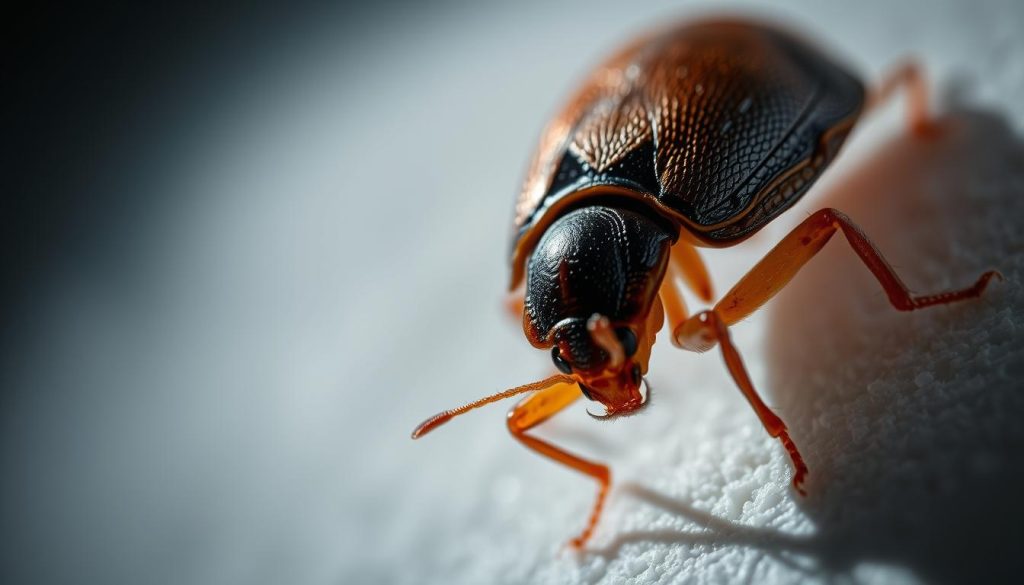
In the UAE, the economic impact of bed bug infestations is significant. Hotels and residential complexes face costly disruptions, from guest complaints to property damage. Super Dream Pest Control has emerged as a leader in tackling these resilient pests. Their advanced monitoring systems detect early-stage infestations, preventing widespread outbreaks.
Bed bugs possess remarkable biological advantages. A single fertilized female can infest an entire building, and these insects can survive up to a year without feeding. Their rapid reproduction and ability to hide in tiny crevices make them formidable opponents.
Global travel patterns have accelerated the spread of resistant strains. Tourists and business travelers unknowingly transport these pests into new regions, including the Middle East. This underscores the need for proactive measures to curb their spread.
| Key Challenges | Solutions |
|---|---|
| Resistance to pesticides | Advanced monitoring systems |
| Economic impact on hospitality | Early detection and prevention |
| Rapid reproduction | Targeted treatment strategies |
Understanding the science behind bed bug resistance is crucial. By leveraging expertise and innovation, we can develop strategies to protect homes, businesses, and communities from these persistent pests.
Current State of Bed Bug Resistance
Recent studies reveal a sharp rise in bed bug resistance to chemical treatments. This issue is not confined to one region but has become a global challenge. Researchers are working tirelessly to understand the mechanisms behind this resistance and develop effective solutions.

Research Findings on Neonicotinoid Resistance
A 2012 study in the US showed that field populations in Cincinnati and Michigan required 10,000 times more neonicotinoids than lab colonies. This staggering difference highlights the extent of resistance these bugs developed over time. Researchers attribute this to genetic mutations that enhance their survival against insecticide exposure.
In Europe, a 2018 genetic sequencing study by Booth and Balvín found that 93.5% of bed bugs had pyrethroid resistance mutations. In contrast, US populations showed dual mutations, making them even harder to control. These findings underscore the need for region-specific strategies.
Global Spread of Resistant Bed Bug Populations
Resistant strains have spread rapidly across the world, from North America to Europe and the Middle East. Detoxifying enzymes play a key role in this resistance, allowing bed bugs to survive exposure to insecticides. These enzymes break down chemicals before they can harm the insects.
In the UAE, international travel routes have accelerated the spread of resistant bed bug populations. This poses unique challenges for pest control strategies in the region. Proactive measures, such as advanced monitoring and early detection, are essential to prevent widespread infestations.
- Analyze the 2012 neonicotinoid study showing extreme resistance levels.
- Compare US and European resistance patterns using genetic data.
- Understand the role of detoxifying enzymes in survival.
- Map the global spread of resistant strains.
- Discuss implications for UAE pest control strategies.
Can Bed Bugs Become Resistant to Modern Pesticides the Future Threat
The adaptability of these insects to chemical treatments has reached alarming levels. Over the years, genetic changes have enabled them to survive exposure to even the strongest insecticides. This evolution poses a significant challenge for pest control strategies worldwide.

Genetic Mutations and Rapid Evolution
One key factor in this resistance is the A302S Rdl mutation. Found in 100% of two US cimex lectularius populations, this mutation allows them to resist fipronil-based treatments. Such genetic changes are accelerating due to their rapid reproduction cycles. These insects can reproduce every 20 days, enabling faster evolutionary adaptation.
Virginia Tech’s research highlights another concern: cross-resistance between dieldrin and modern insecticides. This means that mutations developed decades ago still protect these species today. The lack of new chemical classes since the 1990s further complicates the issue.
Impact on Pest Control Strategies
The reliance on outdated chemical combinations is no longer effective. DIY misuse of insecticides in UAE households is worsening the problem. Overuse of these chemicals accelerates resistance, making infestations harder to manage.
Professional pest control services are now essential. They use advanced methods to combat these resilient insects. Early detection and targeted treatments are crucial to prevent widespread infestations.
- The A302S Rdl mutation plays a key role in resisting fipronil-based treatments.
- Rapid reproduction cycles enable faster evolutionary adaptation.
- No new chemical classes have been introduced since the 1990s.
- Cross-resistance between dieldrin and modern insecticides is a growing concern.
- DIY misuse accelerates resistance, making professional intervention necessary.
Alternative Solutions for Bed Bug Control
Innovative methods are emerging to combat the growing challenge of resilient pests. Traditional chemical treatments are no longer sufficient, prompting a shift toward non-chemical and integrated approaches. These solutions not only get rid of pests but also minimize exposure to harmful substances.
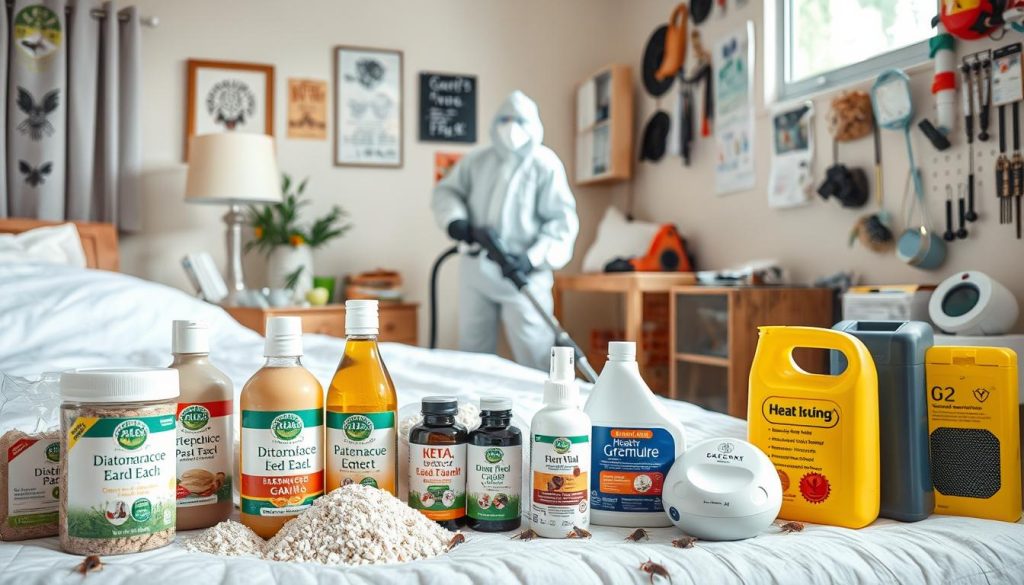
Non-Chemical Methods: Heat, Vapor, and Encasement
One of the most effective non-chemical methods is heat treatment. Super Dream Pest Control uses advanced systems that raise temperatures to 65°C, penetrating furniture and walls to eliminate all life stages. This method is particularly useful in building environments where chemical residues are a concern.
Vapor steamers are another powerful tool. They target eggs hidden in mattresses and crevices without leaving chemical traces. Combined with mattress encasements, these methods prevent reinfestation, offering a cost-effective alternative to repeated insecticide applications.
“Heat treatments are a game-changer in pest control, offering a safe and efficient way to eliminate infestations.”
Role of Professional Pest Control Services
DIY methods often fail, with success rates below 5%. In contrast, professional services like Super Dream Pest Control achieve eradication rates above 95%. Their integrated pest management (IPM) approach combines heat, vapor, and monitoring systems for comprehensive control.
A case study of a UAE hotel chain highlights the effectiveness of these methods. By adopting IPM, the hotel eliminated resistant strains, ensuring guest safety and protecting its reputation.
| Method | Effectiveness | Cost |
|---|---|---|
| Heat Treatment | Eliminates all life stages | High initial cost, long-term savings |
| Vapor Steamers | Targets eggs and hidden pests | Moderate |
| Mattress Encasements | Prevents reinfestation | Low |
By leveraging research and innovation, we can develop strategies to protect homes, businesses, and communities from these persistent pests.
Conclusion: The Future of Bed Bug Control
As we look ahead, the challenge of managing resilient pests continues to grow. Bed bugs are likely to remain a problem for years, as they evolve faster than single-method chemical treatments can keep up. This underscores the need for innovative solutions and ongoing research.
In the UAE, partnerships with firms like Super Dream Pest Control are essential. Their expertise in advanced technologies, such as heat and steam treatments, offers a sustainable way to tackle infestations. Public education campaigns can also reduce DIY insecticide misuse, which often worsens the issue.
Urban centers in the Middle East are increasingly adopting non-chemical methods. These approaches not only protect humanity but also ensure safer living environments. By embracing professional integrated pest management strategies, we can make a significant part of life pest-free.
Let’s work together to address this global challenge. Contact Super Dream Pest Control today for effective, long-term solutions.