Why Ants Keep Coming Back Even After Cleaning (Dubai Homes)
“Nothing in the world can take the place of persistence.” – Calvin Coolidge. This quote perfectly captures the relentless nature of tiny invaders in our living spaces. Their determination mirrors an ongoing struggle many face.
Many residents experience a frustrating cycle. They clean thoroughly, yet six-legged guests reappear. This is a widespread issue in urban areas. The feeling of defeat is all too common.
Our goal is to uncover the root causes. We will explore why these pests return and how to stop them for good. This article provides clear explanations and actionable steps.
The local climate and city landscape play a huge role. High temperatures and modern structures create ideal conditions for colonies. Urban living often unintentionally supports these infestations.
To achieve lasting peace, we must understand insect behavior. Their survival instincts and social structures drive constant foraging. Knowledge of their habits is the first line of defense.
This guide offers a complete strategy. We cover environmental factors, common attractants, and effective removal techniques. Both DIY methods and professional interventions are discussed.
With the right knowledge, you can break this cycle. A pest-free residence is an achievable goal. We are here to guide you through the process.
Key Takeaways
- The problem of ant reinfestation is common and persistent in urban homes.
- Thorough cleaning alone is often insufficient to prevent their return.
- Dubai’s unique climate and infrastructure contribute to the issue.
- Understanding ant biology and colony behavior is crucial for effective control.
- A multi-faceted approach addressing attractants and entry points is necessary.
- Professional pest control services can provide long-term solutions.
- Homeowners can achieve and maintain an ant-free environment with the right strategies.
Introduction: The Frustrating Cycle of Ant Infestations
A familiar scene unfolds in households across the region: a spotless kitchen one day, a trail of tiny invaders the next. This pattern repeats despite our best cleaning efforts. The experience leaves many feeling defeated and puzzled.
The emotional toll is real. Seeing these pests return can be disheartening. It creates a sense that our living spaces are under constant siege.
Here’s the crucial insight: this cycle isn’t about cleanliness. It stems from misunderstanding how these insect colonies operate. What we see represents just a fraction of the actual problem.
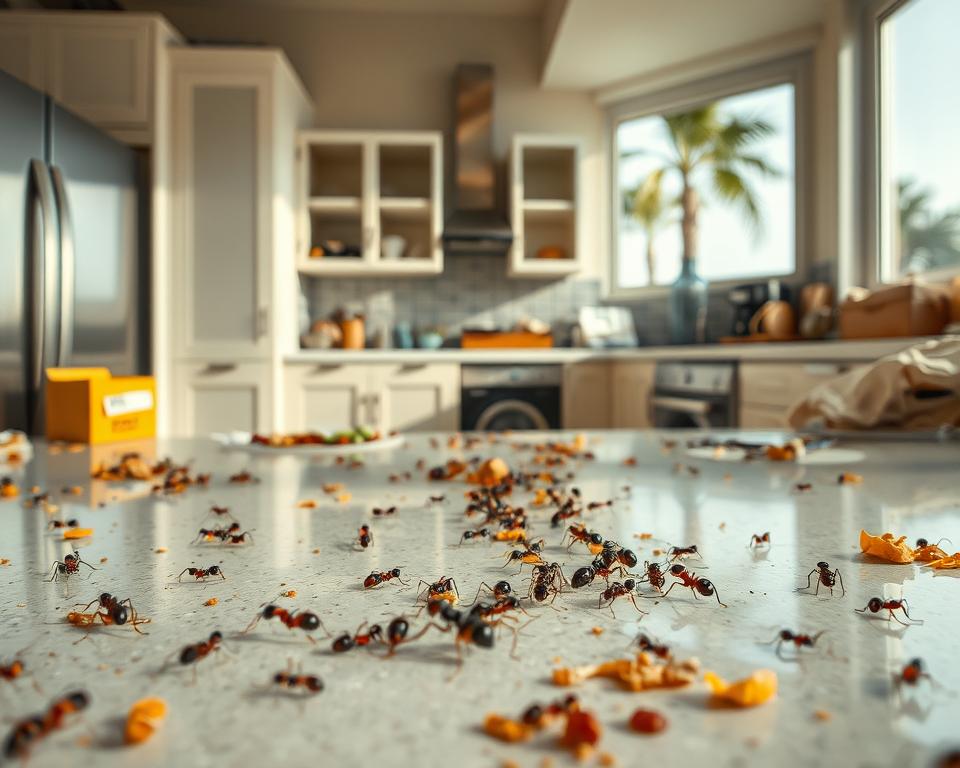
The ants marching across your counter are merely scouts. They make up only 10-15% of their entire colony. Surface treatments leave the queen and nest completely intact to rebuild.
These insects communicate through chemical pheromone trails. These invisible pathways guarantee their return to any rewarding food source. Wiping away visible workers does nothing to erase these scent highways.
Breaking this frustrating pattern requires a strategic shift. We must move from reactive cleaning to proactive colony management. This approach targets the root cause, not just the symptoms.
Local conditions in our urban environment make this cycle particularly challenging to break. Understanding these factors is the first step toward lasting solutions for your home.
Why Ants Keep Coming Back Even After Cleaning (Dubai Homes)
Surface-level eradication efforts frequently miss the core mechanisms driving insect reinfestation.
We often address the symptom—the visible foragers—while the source thrives unseen.
The primary biological reason is straightforward. Eliminating workers does not affect the reproductive queen.
She remains secure deep within a nest, constantly producing new offspring to replace losses.
This means your control efforts are stuck in an endless loop.
Another critical factor is chemical communication. Foragers lay down resilient pheromone trails.
These scent pathways act as invisible highways, guiding others back to food sources.
Standard cleaning with water might dilute these trails, but it rarely erases them completely.
Specialized cleaners or disruptors are needed to truly break this chemical guidance system.
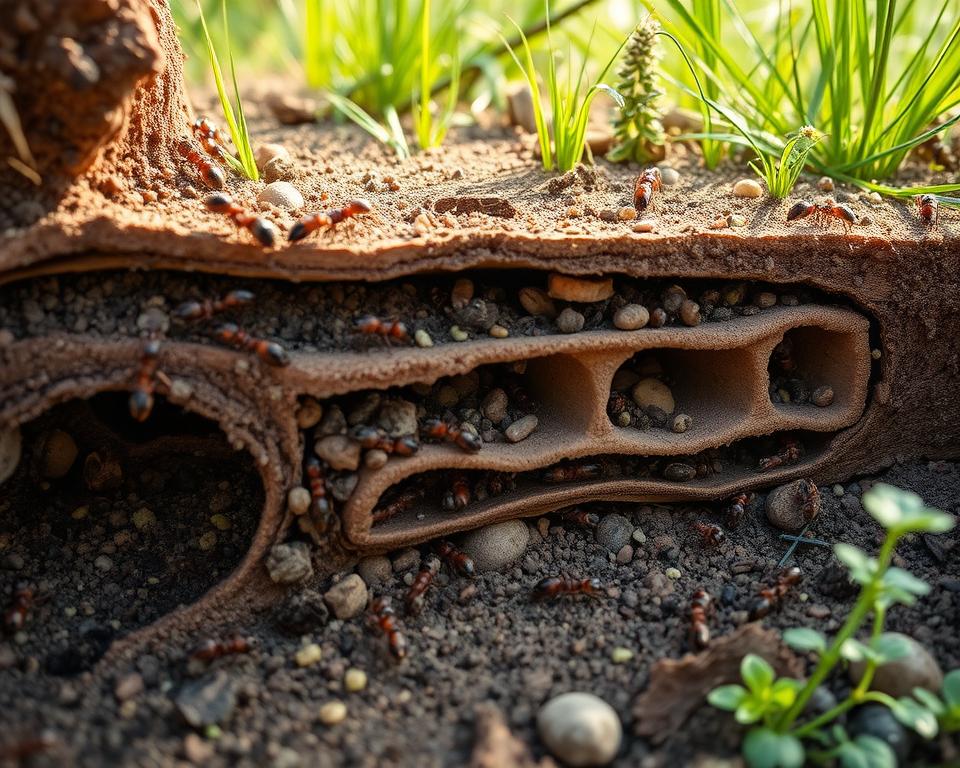
The problem can be more complex than a single nest. Multiple colonies may exist around a property.
Some species even form super-colonies with interconnected nests. Solving one issue doesn’t prevent another from moving in.
This is particularly relevant in dense urban landscapes where living spaces are closely packed.
Local conditions in this region create an ideal environment for large, active colonies.
Consistent warmth and urban density provide perfect shelter and foraging opportunities year-round.
This climate allows populations to grow rapidly and persistently, making reinfestation a common challenge.
Maintaining a clean home is a crucial first step. However, it is not a complete solution on its own.
Structural vulnerabilities and targeted interventions are equally important for lasting results.
We must combine sanitation with sealing entry points and using colony-targeting methods.
The table below contrasts common reactive approaches with proactive strategies that address the root cause.
| Common Mistake (Reactive) | Effective Strategy (Proactive) |
|---|---|
| Only killing visible worker ants on surfaces. | Using slow-acting baits that foragers carry back to the queen and nest. |
| Wiping trails with water only, leaving pheromones intact. | Disrupting trails with vinegar, detergent, or commercial trail breaker solutions. |
| Focusing solely on interior cleaning. | Inspecting and sealing external cracks, crevices, and utility entry points. |
| Treating a single seen trail as an isolated issue. | Assuming multiple colonies exist and conducting a thorough perimeter inspection. |
| Relying on one-time, surface-level sprays. | Implementing an ongoing monitoring and preventive maintenance plan. |
Understanding this “why” is the foundation. It shifts our perspective from temporary fixes to permanent pest control.
With this knowledge, we can now examine the specific local factors that make dubai homes uniquely vulnerable.
The consistent climate here plays a starring role in this persistent pest drama.
Dubai’s Climate: A Year-Round Paradise for Ants
Our city’s unique meteorological conditions create a perfect storm for insect proliferation. The local climate is not just a backdrop; it’s an active participant in the pest drama. This environment provides everything these social insects need to thrive relentlessly.
Three key weather factors combine to form an ideal habitat. Understanding them explains why temporary fixes fail. It also highlights the need for adapted, persistent control strategies.
Consistent Heat Accelerates Reproduction
Warmth acts as a catalyst for insect life cycles. In our region, temperatures remain high throughout the year. This constant heat dramatically speeds up metabolic and reproductive rates.
An ant colony’s growth is directly tied to temperature. Warmer conditions mean eggs hatch faster. Larvae develop more quickly into mature workers.
The result is explosive population growth. A single queen can produce a massive workforce in a short time. This rapid turnover makes colonies incredibly resilient to surface-level interventions.
Common local species like Pharaoh ants are specially adapted to heat. They seek out the warmest areas within walls or under appliances. Their biology is fine-tuned for our environment.
High Humidity Provides Essential Moisture
Moisture is a non-negotiable requirement for survival. These insects need it to drink and to maintain their nest environment. Our humid climate, especially near the coast, delivers this abundantly.
Indoor sources often supplement natural humidity. Leaky pipes, condensation from AC units, and even plant saucers can create micro-habitats. These spots become vital resource stations for foraging scouts.
Without adequate humidity, a colony would struggle and may relocate. Our weather ensures they rarely face this scarcity. It guarantees a steady water supply for drinking and regulating their underground chambers.
No Winter Dormancy Means Constant Activity
In temperate regions, cold winters provide a natural reset. Insect activity halts, and populations dwindle. Our homes enjoy no such seasonal reprieve.
The lack of a cold season means foraging, breeding, and expansion never stop. There is no dormant period to naturally suppress numbers. This non-stop pressure is a key reason infestations feel so relentless.
Colonies operate at full capacity twelve months a year. They continuously send out scouts and expand their territory. This constant activity increases the chance they will find a way into your living space.
Multiple nests and even interconnected super-colonies can develop under these stable conditions. Other species, like sugar ants, also capitalize on this endless summer. The table below summarizes how each climatic factor fuels the problem.
| Climatic Factor | Direct Effect on Ants | Result for Homeowners |
|---|---|---|
| Consistent High Heat | Speeds up egg-laying and larval development; increases colony growth rate. | Populations rebound quickly after treatment; larger infestations are common. |
| Elevated Humidity | Provides essential moisture for drinking and nest humidity control. | Indoor moisture sources (leaks, plants) become major attractants; survival rates are high. |
| Absence of Cold Winter | Eliminates seasonal die-off or dormancy; allows year-round foraging and breeding. | Non-stop pressure and reinfestation risk; no natural break in the pest cycle. |
This climatic reality makes achieving long-term control uniquely challenging. Short-term sprays or cleaning alone cannot overcome these fundamental biological advantages. Climate change may further intensify these favorable conditions, raising the stakes for effective home defense.
Our strategies must account for this perpetual, supportive environment. The next step is to examine how urban structures unintentionally complement this perfect storm.
Urban Living in Dubai Unintentionally Welcomes Ants
Our modern urban environment, designed for human comfort, can inadvertently roll out the welcome mat for persistent six-legged neighbors. The very features of our homes and communities often replace the resources lost to rapid development.
This creates a perfect scenario for infestation. We must understand how our living spaces function as a substitute habitat.
Construction Disrupts Natural Habitats
Constant development reshapes the landscape. As natural areas are cleared, resident insect colonies are displaced.
They don’t simply vanish. These displaced populations seek new shelter and food sources. Our buildings and gardens become the most logical alternative.
This forced migration pushes them directly into our urban spaces. The problem is not an invasion from afar, but a relocation next door.
Cracks and Crevices in Walls Offer Shelter
Modern structures, while sleek, are rarely perfectly sealed. These tiny imperfections become major access points.
Hairline cracks in walls or foundations are like open doors. Gaps around utility pipes, windows, and vents serve as convenient entry corridors.
Once inside, the voids within walls and under floors provide ideal, sheltered nesting sites. These spaces are dark, protected, and often warm.
A colony can establish a secure nest completely out of sight. This makes the infestation a structural issue, not just a surface one.
“The architecture of our cities often builds highways for pests without a single blueprint intending to do so.”
Landscaped Gardens Become Foraging Grounds
Lush, irrigated greenery is a hallmark of local homes. Unfortunately, these well-watered areas are also prime foraging territory.
They offer a buffet of aphid honeydew, other insects, and plant matter. Regular watering ensures a reliable moisture source.
This attracts ants and encourages them to set up satellite colonies nearby. From the garden, the step into your kitchen is a short one for a determined scout.
Common entry points from the garden include cracks in exterior walls and gaps under door frames.
To combat this, a thorough audit of your property is essential. We recommend checking these common vulnerabilities:
- Hairline cracks in exterior plaster and masonry.
- Gaps where pipes or cables enter the building.
- Unsealed edges around window and door frames.
- Vents in the foundation or attic without proper screening.
- Spaces under exterior doors lacking tight seals.
Sealing these access routes is a fundamental preventive step. It physically blocks the ant highways our urban landscape unintentionally creates.
You’re Only Seeing the Tip of the Colony
The tiny foragers marching across your counter represent a mere fraction of a vast, hidden society. What you witness is the outermost layer of a deeply entrenched organization. This fundamental misunderstanding is why surface-level actions fail repeatedly.
To achieve lasting peace, we must grasp the true scale of the infestation. The visible insects are just the disposable workforce. The real power structure operates from the shadows.
The Queen Keeps Producing New Workers
At the heart of every colony lies a single, critical individual: the queen. Her sole purpose is reproduction. She acts as the egg-laying engine for the entire colony.
The workers you see represent only 10-15% of the total population. They are expendable scouts and foragers. Eliminating them is like trimming weeds without pulling the roots.
The queen remains secure deep within a hidden nest. She constantly produces new offspring to replace any losses. This means your efforts are stuck in an endless loop unless she is targeted.
Lasting control requires methods that reach her. Slow-acting baits carried back by workers are one effective strategy. The goal is to stop the production line at its source.
Invisible Pheromone Trails Guide Ants Back
Foraging ants communicate through chemical signals called pheromones. As they travel to a food source, they lay down an invisible scent highway.
These trails are remarkably resilient. They create a persistent memory for the entire colony. Wiping a surface with water often fails to erase this chemical map.
“Pheromone trails are the colony’s collective memory, a chemical guidebook leading straight to resources.”
This is why ants can return to the exact same spot even after cleaning. To break this cycle, you must disrupt these trails. Vinegar, detergent solutions, or commercial disruptors can effectively mask or erase the scent.
Your Home May Host Multiple Colonies or Super-Colonies
The situation can be more complex than a single nest. Your property might be targeted by several independent colonies. Each operates its own foraging network.
Some species, like Argentine ants, form super-colonies. These are networks of interconnected nests with multiple queens. They can span large areas, even entire neighborhoods.
Solving one ant issue doesn’t prevent another from moving in. This complicates do-it-yourself efforts significantly. You might be dealing with a decentralized network, not a single point of origin.
To gauge the true scale, look for signs of nesting activity. Look for small piles of excavated soil or fine debris. Check for consistent activity emerging from a crack in the wall or a gap in the flooring.
Focusing only on foraging trails misses the bigger picture. The table below contrasts the structures you might be facing.
| Typical Single Colony | Super-Colony or Multiple Colonies |
|---|---|
| One primary queen and nest location. | Multiple queens across interconnected nests. |
| Foraging trails radiate from a central point. | A complex web of trails from several entry points. |
| Eliminating the queen can collapse the system. | Removing one queen may not affect the network. |
| Often species like Pharaoh or sugar ants. | Common with species like Argentine ants. |
| Control may seem effective initially. | Problems reappear quickly from a different direction. |
Understanding these hidden dynamics is crucial. It shifts the goal from killing visible ants to managing the colony itself. This perspective is the first step toward ending ant infestations for good.
Once we see the full iceberg, not just its tip, our strategies become far more effective. The next step is to examine what in your home specifically attracts these organized foragers.
Common Attractants in Your Home You Might Overlook
A meticulous surface clean can still miss the microscopic buffet that draws insects inside. We often focus on visible messes while ignoring the tiny residues that truly attract organized foragers. Eliminating these hidden larders is a critical step in breaking the infestation cycle.
Our living spaces provide numerous reliable food sources and water stations. These resources motivate scouts to establish trails and encourage colonies to move in. Let’s explore the common oversights that turn a home into a target.
Hidden Food Residue and Crumbs
Visible crumbs are just the beginning. A thin film of grease on stovetops or behind appliances is a powerful attractant. This oily residue is a high-value food source for many species.
Crumbs accumulate in toaster trays, under refrigerator seals, and in the crevices of countertops. Even a tiny sugar spill behind a coffee maker can fuel a scout’s report back to the nest. Recycled containers and bins often hold sticky residues that are easily exploited.
These microscopic particles are like a beacon. They signal a reliable food supply is available. A thorough clean-up must target these hidden areas, not just open surfaces.
Pet Food Bowls and Unsealed Pantry Items
Pet dishes left out continuously create a perfect, reliable buffet. Dry kibble and water bowls offer both nutrition and moisture. This setup is an open invitation for foraging parties.
Inside the pantry, unsealed packages are vulnerable. Bags of sugar, flour, grains, and cereals are easy targets. A small tear or a loosely closed box is all an ant scout needs to discover a major treasure trove.
An open bag of sugar is not just a snack; it’s a strategic resource that can sustain an entire satellite colony.
The solution is consistent containment. We must store food in airtight containers made of glass or hard plastic. Pet meals should be offered at specific times, and bowls should be washed immediately after feeding.
This practice removes the easy, stationary food sources that make your kitchen so attractive. It forces scouts to search elsewhere.
Moisture from Leaky Pipes and Plant Saucers
Water is as essential as food. Damp areas provide the hydration colonies need to survive. Many common household features create these moisture sources unintentionally.
A slow drip under a sink, condensation from an AC unit, or an overwatered plant saucer can serve as a vital watering hole. These spots are especially appealing in our arid climate. They become landmarks on an insect’s mental map of your property.
Check areas under sinks, around pipe joints, and behind toilets for persistent dampness. Empty plant saucers regularly and avoid overwatering. Fixing minor leaks is a simple step with a major impact on pest pressure.
Eliminating free water removes a key pillar of support for any would-be colony. It makes your environment much less hospitable.
To systematically address these attractants, we recommend a targeted audit. The table below contrasts common oversights with effective corrective actions.
| Commonly Overlooked Attractant | Effective Corrective Action |
|---|---|
| Grease film on backsplashes and behind appliances. | Degrease with a vinegar or detergent solution weekly. |
| Pet food bowls left out 24/7. | Establish timed feedings and wash bowls immediately. |
| Unsealed bags in the pantry. | Transfer all dry goods to airtight containers. |
| Dampness under sink cabinets. | Fix leaks and use a moisture absorber. |
| Full recycling bins with residue. | Rinse containers and take bins out daily. |
A deep clean targeting these areas removes the reward. It breaks the cycle of reinforcement that brings ants back. When scouts find no valuable food sources or water, they stop reporting your home as a prime location.
This makes your space uninteresting to the colony’s central command. The next step is to physically block their access and use targeted methods to deter them for good.
Effective DIY Methods to Deter and Eliminate Ants
Empowering yourself with effective do-it-yourself strategies can break the cycle of reinfestation for good. These solutions focus on the colony’s heart, not just its visible scouts. A strategic combination of methods offers the best chance for lasting control.
Successful DIY treatments require understanding and patience. They work with insect biology to solve the problem at its source. We will guide you through the most effective approaches.
Use Ant Baits to Target the Entire Colony
Ant baits are superior to surface sprays for one key reason. They exploit the foragers’ natural behavior. Workers carry the slow-acting poison back to the hidden nest.
This method can potentially eliminate the queen and larvae. It addresses the core of the infestation. Place bait stations near active trails but not directly on them.
Match the bait to the insects’ preference. Sweet baits work for sugar-loving species. Grease or protein-based options are better for others. Avoid spraying near baits, as it can deter them.
Seal Entry Points with Caulk and Weather Stripping
Physical exclusion is a fundamental DIY step. It blocks the way inside. Start with a thorough inspection of your property’s perimeter.
Look for hairline cracks in foundations and walls. Check gaps around pipes, cables, windows, and doors. These are common entry points.
Use silicone caulk to seal cracks in stationary surfaces. Apply weather stripping or door sweeps to moving parts like exterior doors. Installing fine mesh screens over vents is also effective.
This creates a physical barrier. It makes your home much harder to invade. Sealing entry points is a long-term preventive measure.
Disrupt Trails with Vinegar and Detergent Solutions
Pheromone trails are chemical highways. Disrupting them breaks the communication chain. This confuses the foragers and stops reinforcement.
A simple 1:1 mix of white vinegar and water works well. Spray it directly on and along visible paths. Lemon juice can be used similarly.
For a more potent solution, mix a few drops of dish detergent with water. The soap breaks down the oily pheromones. Glass cleaner with detergent also removes these scent markers effectively.
Apply these solutions consistently whenever you see activity. This erases the map that guides them back into your space.
Employ Natural Deterrents Like Peppermint or Cinnamon
Many natural substances repel these pests without harsh chemicals. They work by overwhelming the insects’ sensitive senses of smell and taste.
Peppermint oil is a powerful deterrent. Mix 10-15 drops with water in a spray bottle. Apply it along baseboards, windowsills, and suspected entry zones.
Ground cinnamon or cayenne pepper can be sprinkled as a barrier. Citrus peels placed near access points are also effective. Diatomaceous earth is a fine powder that damages their exoskeletons.
“The most effective defense is a layered one, combining removal, repellency, and exclusion.”
For a homemade bait, a borax solution can be made. Mix 1/2 teaspoon borax with 8 teaspoons sugar and 1 cup warm water. Soak cotton balls in it and place them in shallow containers.
Crucial warning: Keep all borax mixtures away from children and pets. Use them only in protected, inaccessible areas. Always label homemade treatments clearly.
Consistency and patience are vital with DIY methods. It may take several days to see a significant reduction. Monitor the activity to gauge effectiveness.
If problems persist after two weeks, the infestation may be too large. This indicates it’s time to consider professional ant control. The table below summarizes these key strategies.
| DIY Method | Primary Action | Key Application Tip |
|---|---|---|
| Ant Baits | Targets the entire colony via poisoned food return. | Place near, not on, trails; do not spray nearby. |
| Sealing Entry Points | Creates a physical barrier to block access. | Use silicone caulk for cracks, weather stripping for doors. |
| Trail Disruption | Erases chemical pheromone communication. | Use vinegar or soapy water sprays directly on paths. |
| Natural Deterrents | Repels pests with strong scents or physical barriers. | Reapply oils and powders regularly after cleaning. |
| Sanitation & Moisture Control | Removes attractants that draw scouts inside. | Store food in airtight containers, fix leaks promptly. |
These treatments, when applied together, form a robust defense. They address attractants, block entry, and target the colony. This multi-pronged approach is how you keep ants from returning.
Remember, the goal is to make your environment uninviting and inaccessible. If your diligent efforts don’t yield results, the colony’s scale may require expert intervention. Knowing this limit is part of smart pest management.
When to Call Professional Pest Control in Dubai
While homeowner strategies are valuable, certain infestation scenarios demand specialized knowledge and tools. Do-it-yourself methods have clear limits. Recognizing these limits saves time, money, and frustration.
Over-the-counter pesticides often provide only temporary relief. They rarely address the core of a well-established colony. For true eradication, expert professional pest control is essential.
You should consider calling for pest control services in several key situations. Persistent activity after two weeks of diligent DIY work is a major sign. A large-scale visible infestation with multiple trails also indicates a deep-rooted problem.
Suspected multiple colonies or super-colonies require professional diagnosis. If you are dealing with recurring issues year after year, it’s time for a new strategy. Safety concerns, especially with children or pets, make expert solutions the wise choice.
Choosing a licensed, reputable company is crucial. They have the training and products for lasting results. This investment protects your property and your peace of mind.
Our Approach at Super Dream Pest Control & Cleaning Services UAE
At Super Dream Pest Control & Cleaning Services UAE, we are local experts. We understand the unique challenges properties face in this region. Our deep knowledge of insect behavior and local architecture informs every job.
We don’t just spray and leave. We implement a science-based, integrated pest management (IPM) plan. This approach combines targeted treatments with exclusion and sanitation advice.
Our commitment is to control services that are effective, safe, and environmentally responsible. We adhere strictly to Dubai’s regulatory standards. You can trust us to handle your pest problem with care and professionalism.
Thorough Inspection to Locate Nests and Entry Points
Our process begins with a comprehensive inspection. We go far beyond following visible trails. Our technicians are trained to find the root cause of the activity.
We search for hidden nests in wall voids, under concrete slabs, and within landscaping. We identify all potential entry points, from hairline cracks to utility line gaps. This detective work is the foundation of any successful ant control program.
“A proper inspection maps the invisible infrastructure of the infestation, revealing the colony’s true size and location.”
This step allows us to understand the full scope. We can then design a control strategy that is precise and effective. It moves the battle from guesswork to a targeted campaign.
Safe, Targeted Treatments for Long-Term Elimination
We use advanced, targeted treatments not available to the public. Our methods are selected for both potency and safety for families and pets. The goal is long-term elimination, not just a temporary knockdown.
We employ colony-specific baits that foragers carry back to the queen. Insect Growth Regulators (IGRs) disrupt reproduction cycles. In some cases, precise crack-and-crevice applications seal the fate of hidden colonies.
These professional pest tools are part of a calculated plan. They are designed to collapse the colony from the inside out. This strategy delivers the lasting results that quick sprays cannot.
Preventive Plans to Keep Your Home Ant-Free
Eradication is only half the battle. Prevention is key to keeping your home pest-free. We offer customized maintenance plans for ongoing protection.
These plans include scheduled follow-up visits to monitor for activity. We re-apply barrier treatments as needed and seal new entry points we find. We also provide detailed sanitation and exclusion advice tailored to your property.
This proactive approach provides continuous peace of mind. It turns a reactive problem into a managed situation. Our pest control services are an investment in your property’s long-term comfort.
The table below highlights the key differences between going it alone and enlisting our professional pest control expertise.
| DIY Limitations | Our Professional Solutions |
|---|---|
| Access only to general-store chemicals with temporary effects. | Use of commercial-grade, targeted products for complete colony elimination. |
| Limited ability to locate hidden nests and multiple entry points. | Thorough inspection to map the entire infestation and access routes. |
| One-size-fits-all approach that may not match the specific ant species. | Strategy tailored to the identified species, colony size, and your home’s layout. |
| Focus on killing visible workers, leaving the queen to reproduce. | Methods like IGRs and baits designed to target the reproductive heart of the colony. |
| No ongoing support or preventive maintenance plan. | Customized preventive plans with scheduled follow-ups for lasting protection. |
When you’re ready to end the cycle for good, our team is here. We provide the expert assessment and powerful control services needed to reclaim your space. Contact us for a detailed evaluation of your situation.
Conclusion: Winning the Battle Against Persistent Ants
Achieving lasting freedom from these persistent invaders requires a strategic shift in perspective. We must move beyond reactive cleaning to proactive colony management. Understanding insect biology, local climate, and urban attractants forms the foundation of success.
Lasting pest control demands a dual strategy. First, eliminate the existing colony, often requiring professional solutions. Second, implement rigorous prevention by sealing entry points and removing food sources.
The goal is a long-term, resistant environment for your home. Adopt the practices outlined to deter future infestations. For complex cases, expert control from specialists like Super Dream provides decisive results.
You now have the knowledge and resources to win this battle. Take action today to reclaim your peaceful living space. Contact us for a consultation or begin applying these effective strategies immediately.