7 Proven Home Remedies for Cockroaches – Our Expert List
We at Super Dream Pest Control & Cleaning Services UAE have compiled a list of the 7 Proven Home Remedies for Cockroaches. Discover our expert tips now.
Have you ever wondered why cockroaches seem to thrive no matter what you do? These persistent pests are a common nuisance in UAE households, often leaving families frustrated and searching for solutions. While they may seem invincible, there are effective ways to tackle the problem without resorting to harsh chemicals.
We’ve curated a list of natural and safe methods to help you manage these unwelcome guests. From simple household items to expert-approved techniques, these solutions are designed to be both practical and effective. For severe infestations, trusted professionals like Super Dream Pest Control & Cleaning Services UAE are always ready to assist.
Our expert list focuses on safety and efficiency, ensuring you can reclaim your space without worry. Let’s dive into these proven strategies and take the first step toward a pest-free environment.
Key Takeaways
- Cockroaches are a common issue in UAE households.
- Natural solutions are safe and effective for minor infestations.
- Professional services like Super Dream Pest Control are ideal for severe cases.
- Our list is expert-curated for maximum effectiveness.
- Safety is a top priority in all recommended methods.
Introduction to Cockroach Control
Understanding why cockroaches thrive is the first step to controlling them. These pests are drawn to warm, humid environments, making the UAE’s climate particularly inviting. They seek out food, water, and shelter, often finding all three in our living spaces.
Beyond being a nuisance, cockroaches pose serious health risks. They can transmit diseases like salmonella and trigger allergies or asthma. This makes effective pest control essential for maintaining a safe and healthy environment.
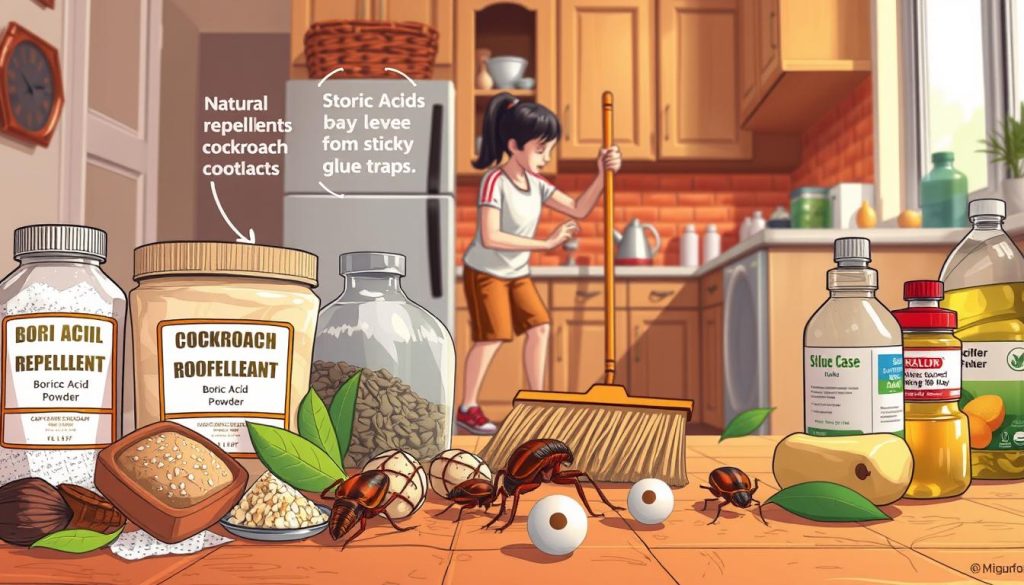
To manage these pests, we focus on three key pillars: sanitation, repellents, and elimination. Keeping your space clean reduces their access to food and water. Natural repellents like essential oils can deter them, while targeted elimination methods address existing infestations.
While DIY methods work for minor issues, they often fall short for larger infestations. In such cases, professional intervention is crucial. Super Dream Pest Control & Cleaning Services UAE offers advanced solutions like their 4D treatment, which ensures thorough and long-lasting results.
By combining preventive measures with expert assistance, you can effectively tackle cockroach problems and reclaim your space. Let’s explore these strategies in detail to help you achieve a pest-free environment.
1. Boric Acid: A Powerful Cockroach Killer
Boric acid is a trusted solution for tackling persistent pests. This powder works by disrupting the digestive system of roaches, leading to their eventual elimination. It’s highly effective when applied correctly and is a popular choice for DIY pest control.
How to Use Boric Acid Safely
To use boric acid, start by dusting it lightly in corners, crevices, and other areas where pests are active. Avoid placing it near food surfaces or where children and pets can access it. Always wear gloves during application to protect your skin.
For enhanced effectiveness, mix boric acid with peanut butter to create a bait. Roaches are attracted to the peanut butter and ingest the acid, ensuring the method works efficiently. Reapply the powder every 2-3 weeks to maintain its potency, especially in humid environments where moisture can reduce its effectiveness.
Safety is paramount when using boric acid. Keep it away from food preparation zones and ensure it’s stored in a secure location. With proper application, this method can significantly reduce pest populations in your space.
2. Baking Soda and Sugar Trap
Combining baking soda and sugar creates a powerful trap for unwanted visitors. This mixture is not only simple to prepare but also highly effective in managing infestations. The key lies in the chemical reaction that occurs when pests consume it.
The Sweet Solution
When pests ingest the baking soda sugar mixture, it reacts with their stomach acid. This reaction produces gas, causing internal buildup that ultimately eliminates them. It’s a safe and natural way to address the problem without harsh chemicals.
For the best results, mix equal parts of baking soda and sugar. Place the mixture in strategic areas like behind fridges, under sinks, and other spots where pests are active. These locations are often hotspots for infestations.
Compared to commercial baits, this DIY solution is cost-effective and equally efficient. However, avoid exposing the mixture to moisture, as it can compromise its effectiveness. Pairing this method with nightly kitchen cleaning routines enhances its impact by removing food sources.
| Method | Effectiveness | Cost |
|---|---|---|
| Baking Soda and Sugar | High | Low |
| Commercial Baits | High | Moderate |
This baking soda sugar trap is a practical addition to your pest control toolkit. It’s easy to prepare, safe to use, and delivers impressive results. Give it a try and see the difference it makes in your space.
3. Bay Leaves: Natural Cockroach Repellent
Bay leaves offer a natural and aromatic way to keep pests at bay. Their strong scent contains active compounds that repel unwanted visitors, making them a safe and effective solution. Unlike harsh chemicals, bay leaves are non-toxic and easy to use.

Crushed bay leaves release a stronger aroma, enhancing their repellent properties. Place them in key areas like pantry shelves, electrical outlets, and corners where pests are active. This herbal defense strategy is both practical and eco-friendly.
Herbal Defense Strategy
For a more intensive approach, consider using bay leaf oil spray. Mix a few drops of the oil with water and spray it in infested areas. This method is ideal for larger spaces or persistent problems.
To maintain effectiveness, replace the leaves every 10 days. This ensures the scent remains strong enough to deter pests. Compared to cedarwood alternatives, bay leaves are equally effective and more accessible.
| Method | Effectiveness | Cost |
|---|---|---|
| Bay Leaves | High | Low |
| Cedarwood | High | Moderate |
Bay leaves are a versatile addition to your pest control toolkit. They’re easy to use, affordable, and deliver impressive results. Give them a try and enjoy a pest-free environment naturally.
4. Diatomaceous Earth: A Non-Toxic Solution
Looking for a non-toxic way to handle persistent pests? Diatomaceous earth might be the answer. This natural powder is made from fossilized algae and works by dehydrating pests, making it a safe and effective solution for managing infestations.
It’s important to use food-grade diatomaceous earth for pest control. Pool-grade DE is chemically treated and not safe for use around pets or humans. Food-grade DE, on the other hand, is non-toxic and eco-friendly.
The Desiccant Approach
When pests come into contact with diatomaceous earth, it damages their exoskeletons. This process causes them to lose moisture and dehydrate over 48-72 hours. It’s a slow but effective method that ensures long-term results.
- Use a bulb duster to apply the powder in cracks, crevices, and other areas where pests are active.
- Reapply after cleaning or if the powder gets wet, as moisture reduces its effectiveness.
- This method is safe for pets, making it a better alternative to chemical treatments.
Compared to other solutions, diatomaceous earth is cost-effective and easy to use. It’s a practical addition to your pest control toolkit, especially for those dealing with cockroach problems. Give it a try and see the difference it makes in your space.
5. White Vinegar: A Simple Cleaning Solution
White vinegar is a versatile and effective tool for pest control. Its natural acidity makes it a powerful disinfectant and repellent. In Dubai’s dusty environment, it’s particularly useful for keeping spaces clean and pest-free.
To create a water spray, mix equal parts white vinegar and water. This 1:1 ratio ensures the solution is strong enough to deter pests while being safe for surfaces. Spray it in high-traffic areas like appliance bases and trash can zones, where pests often gather.
Dual-Purpose Disinfectant
White vinegar’s low pH disrupts roach sensory receptors, making it harder for them to navigate. This natural deterrent is both safe and eco-friendly. For best results, use the water spray weekly to maintain a pest-free environment.
To enhance the scent and effectiveness, add a few drops of lemon juice to the mixture. This not only boosts freshness but also adds an extra layer of repellent power. Here’s a quick comparison of white vinegar with other cleaning solutions:
| Method | Effectiveness | Cost |
|---|---|---|
| White Vinegar | High | Low |
| Commercial Cleaners | High | Moderate |
White vinegar is a practical and affordable solution for pest control. Its dual-purpose nature makes it a must-have in your cleaning toolkit. Try it today and enjoy a cleaner, pest-free space.
6. Essential Oils: Natural Repellents
Harness the power of essential oils to repel unwanted intruders. These natural extracts are not only aromatic but also highly effective in deterring pests. With their strong scents and active compounds, they create an invisible barrier that keeps pests at bay.
Among the most effective essential oils are peppermint, eucalyptus, and tea tree. Peppermint is particularly potent, with its strong aroma overwhelming pests’ senses. Eucalyptus and tea tree oil also offer excellent repellent properties, making them ideal for pest control.
Aromatic Warfare
To create a repellent spray, mix 15 drops of your chosen oil with 500ml of water. Shake well and spray along baseboards, entry points, and other areas where pests are active. This method is safe, eco-friendly, and easy to apply.
The residual effectiveness of essential oils lasts between 3-5 days. Reapply the spray as needed to maintain its potency. For best results, combine this method with regular cleaning to remove food sources and nesting areas.
While essential oils are safe for humans, they can be toxic to cats. Avoid using them in areas where your pets spend time. Always test the spray on a small area first to ensure it doesn’t damage surfaces.
- Peppermint is the strongest repellent, followed by eucalyptus and lavender.
- Use 15 drops per 500ml of water for the ideal concentration.
- Spray along baseboards and entry points for maximum coverage.
- Reapply every 3-5 days to maintain effectiveness.
- Avoid use around cats to prevent toxicity.
By incorporating essential oils into your pest control routine, you can create a safe and pleasant environment. Their natural properties make them a practical and effective solution for keeping pests away.
7. Soap and Water Spray: An Immediate Solution
Dealing with pests can be overwhelming, but a simple soap and water spray offers immediate relief. This method works by suffocating pests through their spiracles, making it a quick and effective solution.
Contact Killer Formula
For enhanced effectiveness, we recommend using castile soap. It’s gentle yet powerful, ensuring pests are eliminated without harsh chemicals. To apply, fill a spray bottle with water and add a few drops of soap.
Direct the spray onto the undersides of pests, where their spiracles are located. This ensures the solution works quickly, often within 30-60 seconds. Repeat treatments are necessary to address egg cases, ensuring complete elimination.
- Use castile soap for maximum effectiveness.
- Spray directly on pest undersides for quick results.
- Reapply to target egg cases and prevent reinfestation.
- Compare to fabric softener alternatives for similar results.
This method is safe, easy to use, and delivers immediate results. Keep a spray bottle handy for quick action against pests.
8. Garlic, Onion, and Pepper Spray
A powerful blend of garlic, onion, and pepper can create an effective barrier against pests. This natural spray is easy to make and uses ingredients you likely already have in your kitchen. It’s a safe and eco-friendly way to manage infestations without harsh chemicals.
To prepare the spray, combine 3 garlic cloves, 1 onion, and 1 tablespoon of cayenne pepper in a pot of water. Boil the mixture for 10-15 minutes to extract the active compounds. Once cooled, strain the liquid into a spray bottle for easy application.
Pungent Perimeter Defense
Apply the spray in key areas like door thresholds, vents, and other entry points. These zones are common pathways for pests, making them ideal for creating a protective barrier. Reapply every few days to maintain its effectiveness.
This DIY solution has a shelf life of 7 days when refrigerated. Be cautious when using it near kitchen surfaces, as it can leave residue. For best results, clean the area thoroughly before application.
Compared to commercial pyrethrin sprays, this natural alternative is cost-effective and safer for your family and pets. Here’s a quick comparison:
| Method | Effectiveness | Cost |
|---|---|---|
| Garlic, Onion, Pepper Spray | High | Low |
| Commercial Pyrethrin Sprays | High | Moderate |
This natural spray is a practical addition to your pest control toolkit. It’s easy to make, safe to use, and delivers impressive results. Give it a try and enjoy a pest-free environment naturally.
9. Catnip: A Safe Repellent
Catnip, often associated with feline fun, has surprising pest-repelling properties. The active compound, nepetalactone, is highly effective against pests. It works as a neurotoxin, disrupting their nervous system and deterring them from treated areas.
Feline-Friendly Deterrent
To use catnip as a repellent, prepare sachets using coffee filters. Fill them with dried catnip and tie them securely. Place these sachets in strategic locations like electronics, bookshelves, and other pest-prone areas. The strong scent acts as a natural barrier.
However, be cautious if you have pets. Cats are naturally attracted to catnip and may interfere with the treatment. For multi-cat households, consider alternatives like cedarwood or bay leaves, which are equally effective but less appealing to felines.
- Catnip’s nepetalactone disrupts pests’ nervous systems.
- Prepare sachets using coffee filters for easy placement.
- Place sachets in electronics and bookshelves for maximum coverage.
- Avoid using catnip if you have cats in the house.
- Alternatives like cedarwood work well for multi-cat households.
| Method | Effectiveness | Pet Safety |
|---|---|---|
| Catnip | High | Low (for cats) |
| Cedarwood | High | High |
Catnip is a safe and natural way to manage pests. Its ease of use and effectiveness make it a valuable addition to your pest control toolkit. Try it today and enjoy a pest-free environment.
10. Lemon Juice: A Fresh Deterrent
Citrus-based solutions are a fresh approach to pest control. Lemon juice, with its high citric acid content, is a natural and effective way to repel unwanted intruders. Its strong scent and acidity disrupt pests’ senses, making it harder for them to navigate treated areas.
Citrus Shield Technique
To create a spray, mix 30% lemon juice with 70% water. This concentration ensures the solution is potent enough to deter pests while being safe for surfaces. Apply the mixture to prime targets like counter seams and cabinet hinges, where pests often hide.
For best results, combine this method with daily cleaning routines. Wiping down surfaces removes food residues, while the lemon juice spray creates a protective barrier. This synergy enhances the overall effectiveness of your pest control efforts.
- Mix 30% lemon juice with 70% water for optimal concentration.
- Focus on counter seams and cabinet hinges for maximum coverage.
- Pair with daily cleaning to remove food sources and nesting areas.
- Reapply every 2-3 days to maintain effectiveness.
Compared to commercial citrus-based pesticides, this DIY solution is cost-effective and eco-friendly. It’s a practical addition to your pest control toolkit, especially for those dealing with cockroaches.
| Method | Effectiveness | Cost |
|---|---|---|
| Lemon Juice Spray | High | Low |
| Commercial Citrus Pesticides | High | Moderate |
By incorporating lemon juice into your routine, you can create a fresh and pest-free environment. Its natural properties make it a safe and effective choice for managing infestations.
Conclusion: When to Seek Professional Help
When DIY methods fall short, it’s time to consider professional pest control. Persistent signs like nocturnal activity sounds or egg casings indicate severe infestations that require expert attention.
Super Dream Pest Control & Cleaning Services UAE offers a comprehensive IPM approach. Their process includes thorough inspection, targeted treatment, and preventive measures to ensure long-term results. With UAE-specific certifications and eco-friendly protocols, they prioritize safety and sustainability.
While DIY solutions can take weeks, professional pest control delivers results in as little as 48 hours. For peace of mind, book a free inspection today and benefit from their warranty-backed services. Don’t let pests take over—trust the experts to reclaim your space.