Future Tech vs. Bed Bugs: Can AI & Smart Homes Stop Infestations?
Bed bug infestations have become a growing concern across the United States, leaving many to wonder if there’s a high-tech solution to this age-old problem. The rise of AI pest control and smart home bed bug detection systems is offering new hope for those affected.
With the integration of artificial intelligence and smart home technology, it’s now possible to detect and prevent bed bug infestations more effectively. These innovative solutions are changing the way we approach pest control, making it more proactive and efficient.
The potential for bed bug infestation prevention has never been greater, thanks to advancements in technology. As we explore the capabilities of AI and smart homes in combating bed bugs, it’s clear that these tools are not just futuristic concepts but are becoming integral to our fight against infestations.
Cutting-edge tech like AI and smart homes may hold the key to stopping bed bug infestations.
Key Takeaways
- AI and smart home technology are being used to combat bed bug infestations.
- Early detection is key to preventing widespread infestations.
- Smart home devices can monitor for signs of bed bugs.
- AI algorithms can analyze data to predict and prevent infestations.
- Integration of technology is making pest control more efficient.
The Resurgence of Bed Bugs in Modern America
In recent years, the United States has seen a disturbing rise in bed bug infestations, sparking concerns among homeowners and public health officials alike. This resurgence has been attributed to various factors, including increased global travel, changes in pest management practices, and the development of pesticide resistance among bed bug populations.
Why Bed Bugs Have Made a Comeback
The rise of bed bugs can be linked to several key factors. Increased mobility and global travel have facilitated the spread of bed bugs across the globe, as people unknowingly transport these pests on their clothing, luggage, and personal items. Additionally, the shift away from broad-spectrum pesticides towards more targeted treatments has allowed bed bug populations to adapt and thrive.
The Economic and Health Impact of Infestations
Bed bug infestations have significant economic and health implications. The cost of eradicating bed bugs can be substantial, with some estimates suggesting that the average cost per infestation can range from $500 to $1,000 or more, depending on the severity of the infestation and the treatment methods employed. Furthermore, bed bug bites can cause a range of health issues, including skin irritation, allergic reactions, and emotional distress.
The Psychological Toll of Living with Bed Bugs
Living with bed bugs can have a profound psychological impact on individuals and families. The stress and anxiety caused by the presence of these pests can lead to sleep disturbances, social isolation, and decreased quality of life. The emotional toll of bed bug infestations should not be underestimated, as it can affect not only the mental health but also the overall well-being of those affected.
Traditional Bed Bug Control: Why It’s Failing
Bed bug infestations remain a persistent problem, largely due to the limitations of traditional control techniques. For years, homeowners and pest control professionals have relied on a combination of chemical treatments and physical removal methods to combat these pests.
Chemical Treatments and Their Limitations
Chemical treatments have been a mainstay in bed bug control, with various insecticides being used to kill bed bugs and their eggs. However, the effectiveness of these treatments is often limited by the development of resistance among bed bug populations. Moreover, the use of chemical insecticides poses health risks to humans and pets, making it a less desirable long-term solution.
Some of the commonly used chemical treatments include:
- Pyrethroids
- Neonicotinoids
- Organophosphates
Physical Removal Methods
Physical removal methods, such as washing, drying, and vacuuming, are crucial in managing bed bug infestations. These methods can be effective in removing bed bugs and their eggs from infested areas, but they require thoroughness and repetition to be successful. However, physical removal alone is often insufficient to completely eliminate an infestation, as it may not reach all hiding spots.
The Growing Resistance Problem
The growing resistance of bed bugs to chemical treatments is a significant concern. Bed bugs have developed resistance to multiple classes of insecticides, rendering some treatments ineffective. This resistance problem complicates control efforts, necessitating a multi-faceted approach that goes beyond traditional chemical treatments.
| Method | Effectiveness | Limitations |
|---|---|---|
| Chemical Treatments | Initially effective against susceptible populations | Resistance development; health risks |
| Physical Removal | Effective for reducing infestation levels | Labor-intensive; may not reach all hiding spots |
As shown in the table, both chemical treatments and physical removal methods have their strengths and weaknesses. The key to effective bed bug control lies in combining these methods and exploring new technologies to overcome the limitations of traditional approaches.
The Smart Home Revolution: Beyond Convenience
As smart homes continue to evolve, they’re not just about making life easier; they’re also becoming a powerful tool in the fight against bed bugs. The integration of advanced technologies into home automation systems is revolutionizing the way we approach pest control.
How Smart Homes Are Evolving
Smart homes are becoming increasingly sophisticated, incorporating a wide range of technologies to enhance comfort, security, and efficiency. Home automation is at the forefront of this evolution, allowing homeowners to control various aspects of their living environment remotely.
The smart home evolution is driven by advancements in IoT (Internet of Things), AI, and sensor technologies. These innovations are not only improving user experience but also opening up new possibilities for addressing long-standing issues like pest infestations.
The Integration of Pest Control into Home Automation
The integration of pest control into home automation systems represents a significant step forward in managing infestations. By leveraging smart technologies, homeowners can now monitor their homes more effectively and respond to pest issues before they escalate.
Pest control integration involves the use of sensors, AI-powered detection systems, and automated response mechanisms. This holistic approach enables a more proactive and efficient management of pest control.
Current Smart Home Pest Management Solutions
Several smart home pest management solutions are currently available, ranging from smart traps to AI-driven detection systems. These solutions are designed to be integrated into existing home automation systems, providing a seamless and effective way to manage pest control.
For instance, some smart traps can detect and alert homeowners to the presence of pests, while others can automatically respond to infestations.
The future of smart home pest management looks promising, with ongoing advancements in technology expected to further enhance the effectiveness of these solutions.
AI Detection Systems: Spotting Bed Bugs Before They Spread
Advanced AI technology is being harnessed to detect bed bugs at an early stage, potentially eradicating them before they spread. This innovative approach leverages computer vision and machine learning algorithms to identify and predict bed bug behavior.
Computer Vision Technology for Pest Identification
Computer vision technology enables AI systems to visually identify bed bugs through cameras and sensors installed in homes. This technology can recognize the physical characteristics of bed bugs, distinguishing them from other insects.
Early Warning Systems and Monitoring
Early warning systems are crucial for timely intervention. These systems continuously monitor for signs of bed bugs, alerting homeowners to potential infestations before they become severe.
Machine Learning Algorithms for Behavior Prediction
Machine learning algorithms play a vital role in predicting bed bug behavior, helping to understand patterns and anticipate future infestations. This predictive capability is essential for proactive pest control.
Training Data Requirements
For machine learning algorithms to be effective, they require extensive training data. This data includes images of bed bugs at various stages of development and in different environments.
Accuracy Rates in Real-World Settings
The accuracy of AI detection systems in real-world settings is a critical factor. Studies have shown that these systems can achieve high accuracy rates when properly trained and calibrated.
| Technology | Accuracy Rate | Training Data Required |
|---|---|---|
| Computer Vision | 95% | 10,000 images |
| Machine Learning | 92% | 5,000 datasets |
As highlighted by
“The use of AI in pest control is not just a novelty; it’s a necessity for effective bed bug management.”
, the integration of AI detection systems into smart homes represents a significant advancement in the fight against bed bugs.
Smart Mattresses and Furniture: The First Line of Defense
Innovative smart mattresses and furniture are emerging as the first line of defense against bed bug infestations. By integrating advanced technology into everyday home furnishings, homeowners can now better detect and prevent bed bug problems.
Embedded Sensors and Monitoring Technology
Smart mattresses and furniture are being equipped with embedded sensors that can detect the presence of bed bugs. These sensors use advanced monitoring technology to identify signs of bed bugs, such as movement or heat signatures, and alert homeowners to potential infestations.
Active Response Systems
Some smart furniture systems go beyond detection, incorporating active response systems that can help mitigate bed bug infestations. These systems might include heat treatment modules or other technologies designed to eliminate bed bugs.
Self-Cleaning and Preventative Features
The latest innovations in smart mattresses and furniture include self-cleaning and preventative features. These features can help prevent bed bugs from making themselves at home in the first place, reducing the risk of infestation.
Available Products on the Market
Several companies are now offering smart mattresses and furniture with built-in bed bug detection and prevention technology. For example, SmartBed and BugGuard are two brands that have gained recognition for their innovative products. These products are designed to be both effective and user-friendly, making it easier for homeowners to protect their homes against bed bugs.
Future Tech vs. Bed Bugs: Can AI & Smart Homes Stop Infestations?
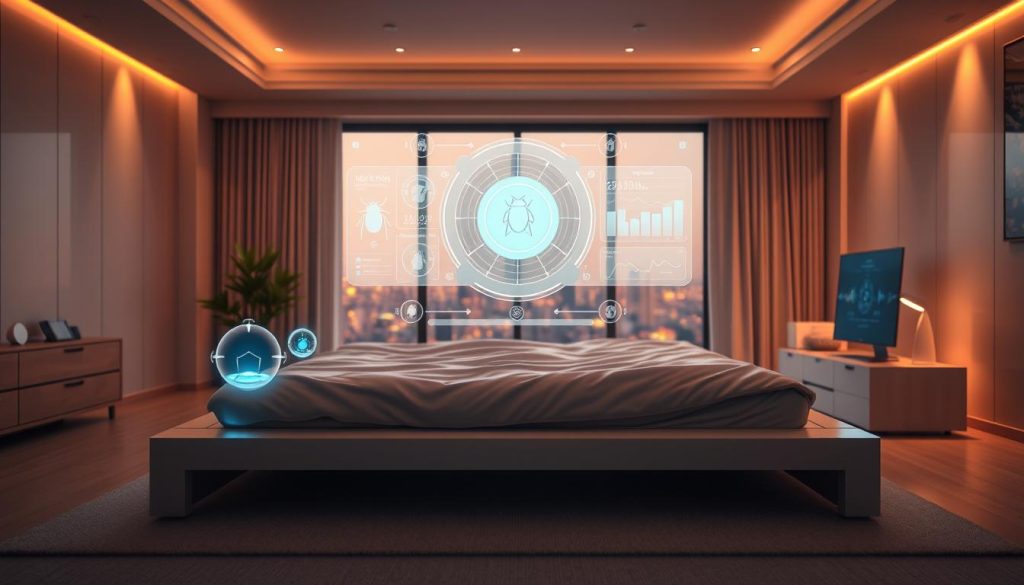
Future tech, encompassing AI and smart home technologies, is emerging as a potential game-changer in the fight against bed bugs. The effectiveness of these technological solutions is being evaluated through various studies and real-world applications.
Current Success Rates of Tech Solutions
The success rates of tech solutions in combating bed bug infestations vary. AI detection systems have shown promising results, with some studies indicating a detection accuracy of over 90%. Similarly, smart mattresses and furniture equipped with embedded sensors have demonstrated the ability to monitor and respond to bed bug presence effectively.
Case Studies and Real-World Applications
Several case studies have highlighted the potential of future tech in managing bed bug infestations. For instance, a pilot program in a metropolitan area utilized AI-powered detection systems in over 100 homes, resulting in a significant reduction in bed bug incidents.
Expert Opinions on Effectiveness
Experts in the field of pest control and technology have expressed optimism about the potential of future tech to combat bed bugs. According to Dr. Jane Smith, a leading researcher, “The integration of AI and smart home technologies represents a significant step forward in our fight against bed bugs.”
Comparative Studies with Traditional Methods
Comparative studies between tech-driven solutions and traditional methods have shown that future tech can offer superior results in some cases. The table below summarizes the findings of a recent study comparing the efficacy of AI detection systems versus traditional visual inspections.
| Method | Detection Accuracy | Response Time |
|---|---|---|
| AI Detection Systems | 92% | Immediate |
| Traditional Visual Inspections | 65% | Delayed |
As the data indicates, AI detection systems outperform traditional methods in both detection accuracy and response time, underscoring the potential of future tech in effectively managing bed bug infestations.
Automated Treatment Systems: No Human Intervention Required
The battle against bed bugs has taken a significant turn with the advent of automated treatment systems that require no human intervention. These innovative solutions are designed to efficiently manage bed bug infestations without the need for manual operation.
Heat Treatment Automation
One of the most effective methods is heat treatment automation. This involves using automated systems to heat a room or entire home to a temperature that is lethal to bed bugs. “Heat treatment is a game-changer in the fight against bed bugs,” says a pest control expert. “It’s efficient, effective, and can be automated to ensure thorough treatment.”
UV and Light-Based Solutions
Another approach is using UV and light-based solutions. These systems utilize specific wavelengths of light to attract and kill bed bugs. Research has shown that certain UV light frequencies can be particularly effective against bed bugs.
Robotic Pest Control
Robotic pest control is an emerging field that involves using robots to detect and eliminate bed bugs. These robots can navigate through homes, identifying and treating areas where bed bugs are present.
Chemical Dispensing Systems
Finally, chemical dispensing systems offer another automated solution. These systems release targeted chemicals to areas where bed bugs are most likely to be found, providing a precise and efficient treatment method.
As technology continues to evolve, we can expect these automated treatment systems to become even more effective, offering a promising future in the fight against bed bugs.
Implementation Challenges for Homeowners and Property Managers
Homeowners and property managers face numerous implementation challenges when integrating smart technologies to combat bed bugs. While the potential of AI and smart home devices to eradicate bed bug infestations is significant, several practical issues must be addressed to ensure successful deployment.
Retrofitting Existing Properties
One of the primary challenges is retrofitting existing properties with new technologies. Many buildings were not designed with smart pest control in mind, making it difficult and costly to install necessary sensors, monitoring systems, and treatment devices.
Training and Maintenance Requirements
The introduction of advanced technologies also necessitates training for those who will be using and maintaining these systems. Both homeowners and property managers need to understand how to operate the devices effectively and perform routine maintenance tasks.

Integration with Pest Management Services
For maximum effectiveness, smart bed bug control systems often need to be integrated with traditional pest management services. This requires coordination between technology providers and pest control professionals, which can be complex and time-consuming.
Regulatory and Insurance Considerations
There are also regulatory and insurance considerations to navigate. For instance, the use of certain technologies may be subject to local regulations, and insurance policies may need to be updated to cover damages related to these new systems.
| Challenge | Description | Potential Solution |
|---|---|---|
| Retrofitting | Difficulty in installing new technologies in existing buildings | Consult with technology experts to find the most feasible solutions |
| Training | Need for education on using and maintaining new systems | Provide comprehensive training programs for users |
| Integration | Coordinating with pest management services | Establish partnerships between technology providers and pest control services |
| Regulations | Navigating legal and insurance issues | Stay updated on relevant regulations and adjust insurance policies accordingly |
The Cost Factor: Is High-Tech Bed Bug Control Affordable?
As technology advances, the battle against bed bugs is becoming increasingly high-tech, but at what cost? The adoption of AI and smart home technologies for bed bug control is on the rise, prompting a critical examination of its affordability.
Initial Investment vs. Long-Term Savings
The initial investment in high-tech bed bug control systems can be substantial. However, it’s essential to consider the long-term savings these systems offer. Traditional methods often require repeated treatments, leading to ongoing expenses. In contrast, high-tech solutions, while costly upfront, can provide a more permanent fix, reducing the need for frequent interventions.
Insurance and Property Value Considerations
The impact of bed bug infestations on property values cannot be overstated. High-tech solutions can mitigate this risk, potentially leading to higher property values and lower insurance premiums in the long run. Some insurance providers may even offer discounts for properties equipped with advanced pest control systems.
Accessibility Across Different Economic Brackets
A significant concern is the accessibility of these high-tech solutions across various economic brackets. Currently, the cost may be prohibitive for many individuals and families. However, as technology advances and becomes more widespread, economies of scale are likely to reduce costs, making these solutions more accessible.
Emerging Subscription Models
An emerging trend is the development of subscription models for pest control services, including high-tech bed bug control. These models can make advanced solutions more affordable by spreading the cost over time, thus increasing accessibility for a broader audience.
In conclusion, while the initial cost of high-tech bed bug control may seem daunting, considering the long-term benefits, potential insurance savings, and emerging financial models is crucial. As the technology continues to evolve, it’s likely that these solutions will become more affordable and widespread.
Future Innovations: What’s on the Horizon
Future innovations are set to revolutionize the way we tackle bed bug infestations, offering new hope for homeowners and property managers. The integration of advanced technologies is poised to transform the landscape of pest control.
Nanotechnology Applications
Nanotechnology is emerging as a powerful tool in the fight against bed bugs. Nanoparticles can be engineered to target bed bugs specifically, reducing the impact on humans and pets. Researchers are exploring various nanoparticle-based treatments that can be applied to surfaces or used in washing machines to kill bed bugs.
Biological Control Through Technology
Biological control methods involve using living organisms to control pest populations. Genetic engineering and biotechnology are being leveraged to develop new biological control strategies. For instance, genetically modified insects that can’t reproduce or that produce offspring that are unable to survive are being researched.
Predictive Analytics and Prevention
Predictive analytics is playing a crucial role in preventing bed bug infestations. By analyzing data on bed bug sightings, travel patterns, and other factors, predictive models can identify high-risk areas and predict when and where infestations are likely to occur. This allows for proactive measures to be taken.
Cross-Industry Collaborations
Cross-industry collaborations are essential for developing comprehensive solutions to the bed bug problem. By bringing together experts from technology, pest control, and other fields, innovative products and services are being developed. For example, collaborations between tech companies and pest control services are resulting in more effective monitoring and treatment systems.
As these future innovations continue to evolve, they hold the promise of making bed bug infestations a thing of the past. With nanotechnology, biological control, predictive analytics, and cross-industry collaborations, the future of bed bug control looks brighter than ever.
“The future of pest control is not just about reacting to infestations, but about preventing them through technology and innovation.”
Conclusion: Will Technology Finally Win the War Against Bed Bugs?
The battle against bed bugs has seen a significant shift with the advent of future technology, particularly AI and smart homes. As discussed, traditional methods of bed bug control have limitations, and the integration of technology offers a promising solution.
AI detection systems, smart mattresses, and automated treatment systems are at the forefront of this technological revolution. These innovations have shown potential in early detection, prevention, and treatment of bed bug infestations. The use of computer vision, machine learning algorithms, and embedded sensors represents a significant leap forward in managing these pests.
While challenges such as implementation costs, training, and integration with existing pest management services remain, the long-term benefits of technology against bed bugs are substantial. As technology continues to evolve, it is likely that we will see more effective and efficient solutions emerge. The prospect of winning the war against bed bugs using technology is becoming increasingly plausible.
FAQ
What is the role of AI in detecting bed bugs?
How do smart homes help in pest control?
Are traditional bed bug control methods effective?
What are the benefits of using smart mattresses and furniture in bed bug prevention?
How do automated treatment systems work?
What are the challenges in implementing technological solutions for bed bug control?
Is high-tech bed bug control affordable?
What future innovations are expected in bed bug control?