How to Identify Termite Infestation in Dubai Homes
Discover how to identify termite infestation in Dubai homes by recognizing signs like mud tubes and subterranean termites to protect your property.
Dubai’s warm climate makes homes vulnerable to destructive pests that can weaken structures silently. These pests cause over $5 billion in property damage annually in the U.S., and Dubai faces similar risks. Early detection is crucial to prevent costly repairs.
Both drywood and subterranean species can harm your property. Many homeowners only notice the problem when damage is severe. That’s why Super Dream Pest Control & Cleaning Services UAE specializes in detecting and managing these issues before they escalate.
In the next sections, we’ll cover key indicators like hollow-sounding wood and discarded wings. Knowing what to look for helps protect your home from unseen threats.
Key Takeaways
- Dubai’s climate increases the risk of structural damage from pests.
- Early detection prevents expensive home repairs.
- Both drywood and subterranean species pose threats.
- Super Dream Pest Control offers expert solutions in the UAE.
- Most problems go unnoticed until advanced stages.
Understanding Termites and Their Threat to Dubai Homes
Modern villas in Dubai often conceal silent invaders that compromise structural integrity. Two primary species dominate: subterranean termites and drywood termites. Each exploits different vulnerabilities in homes.
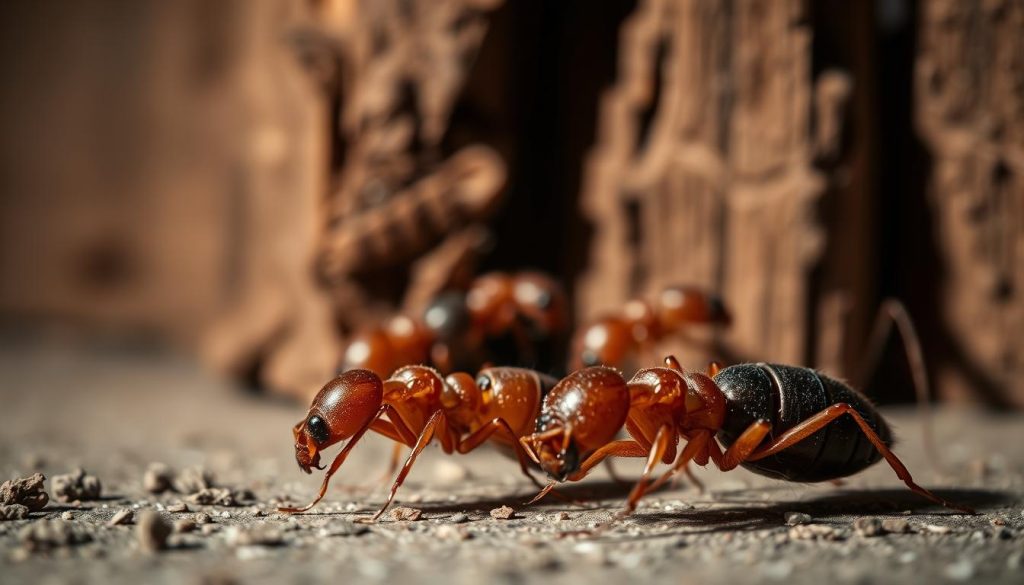
Subterranean termites build massive underground colonies, sometimes exceeding one million members. They tunnel through soil to reach wood, targeting construction joints in villas. Dubai’s sandy terrain and irrigation systems provide ideal moisture for their survival.
Drywood termites thrive in imported furniture and hardwood floors. They consume wood at alarming rates—up to one pound per cubic foot annually. Unlike subterranean species, they don’t need soil contact, making them harder to detect.
| Feature | Subterranean Termites | Drywood Termites |
|---|---|---|
| Colony Size | Up to 1M+ | Thousands |
| Preferred Habitat | Underground, moist areas | Dry wood, furniture |
| Damage Rate | Slow but widespread | Fast, localized |
| Detection Difficulty | Moderate (mud tubes) | High (internal damage) |
Dubai’s climate accelerates their activity. Year-round warmth allows continuous feeding, and 35% of UAE pest cases involve these pests. Left untreated, repairs can cost thousands—especially for custom woodwork common in Emirati homes.
We recommend proactive inspections to identify risks early. Look for mud trails or tiny wood pellets near furniture—these subtle clues often precede major damage.
Visible Signs of Termite Infestation
Silent invaders leave clear markers if you know where to look—especially in Dubai’s climate. We’ll guide you through the top three red flags that demand immediate attention.
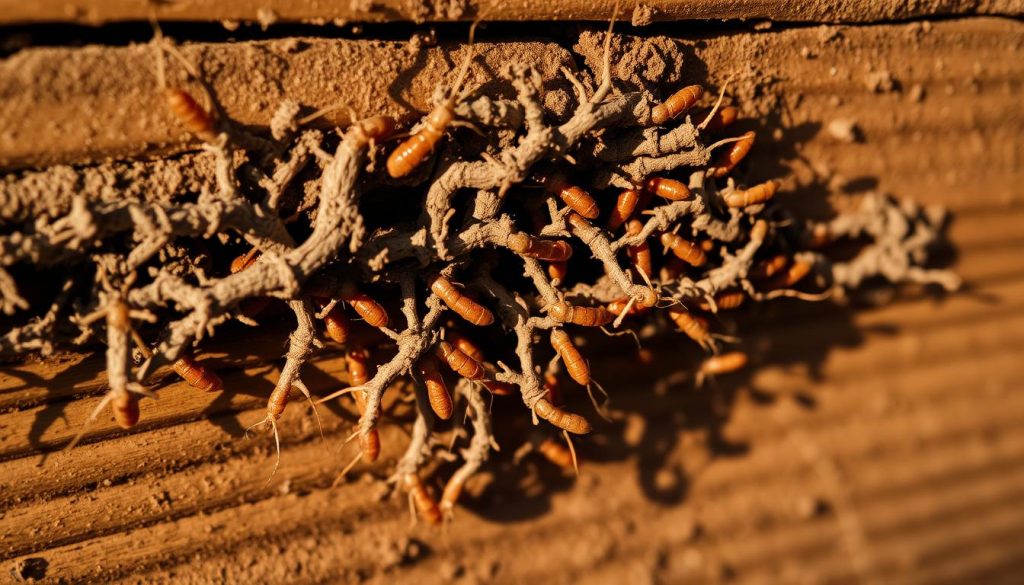
Mud Tubes Along Foundations
These pencil-width tunnels on exterior walls or foundations are highways for pests. Mud tubes maintain 90% humidity, allowing colonies to thrive undetected. Inspect where soil meets your home’s structure—especially in shaded areas.
Discarded Wings Near Windowsills
Finding tiny 2.5mm wings clustered near light sources? Swarmers shed them after mating, often during Dubai’s peak season (March–May). This signals a nearby colony’s expansion.
Hollow-Sounding Wood or Crumbling Structures
Tap wooden beams with a screwdriver. A hollow echo or crumbly texture suggests internal damage. Our knock-test method detects compromised wood with 80% accuracy.
“A Jumeirah villa avoided major repairs after we identified and removed mud tubes early. Proactive checks saved 70% of their wooden architraves.”
- Act fast: Mud tubes mean active termite activity.
- Seasonal clues: Wing piles are most common in spring.
- Test thoroughly: Check floors, beams, and furniture joints.
Less Obvious Indicators of Termites
Some clues of pest activity hide in plain sight but require expert knowledge to spot. We’ll uncover subtle hints like frass and moisture-related distortions that often go unnoticed.
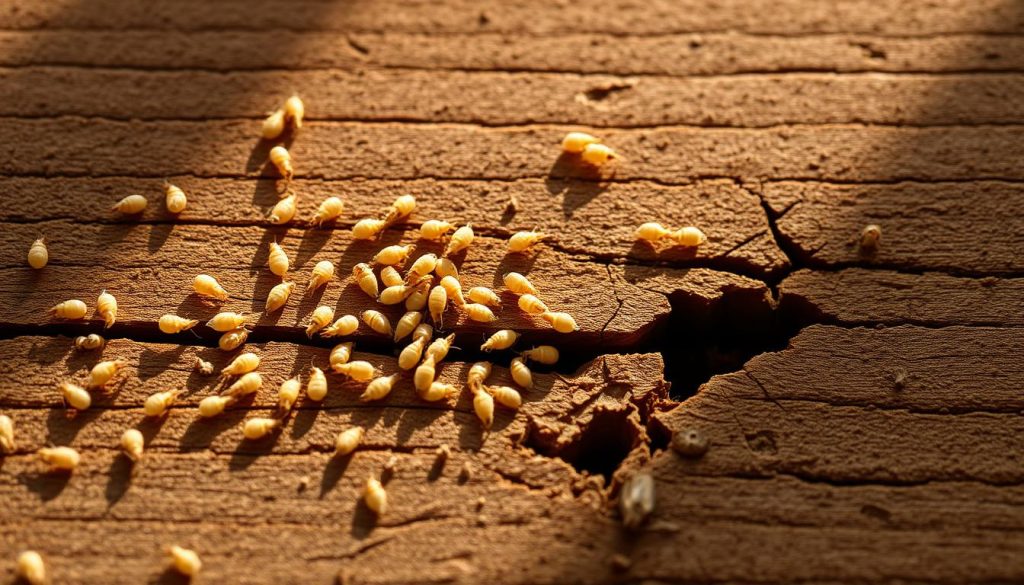
Frass (Termite Droppings) Near Wooden Surfaces
Drywood pests leave behind frass—tiny pellets resembling coffee grounds. Unlike sawdust, these droppings contain metal fragments from digested wood. A magnet test helps confirm their presence.
- Lab analysis: Super Dream’s frass testing identifies species and colony size.
- Location clues: Check window sills, baseboards, and furniture joints.
Bubbling Paint or Warped Flooring
Blistering paint signals moisture trapped beneath surfaces, often from hidden pests. Similarly, warped flooring in 73% of cases links to their activity. Infrared cameras reveal these invisible threats.
“A Dubai Marina apartment’s buckling floorboards led us to a concealed colony. Early intervention saved 80% of the subfloor.”
Use a moisture meter on suspicious areas. Persistent humidity above 60% warrants professional inspection.
Subterranean vs. Drywood Termites: Key Differences
Not all wood-eating pests operate the same way—their habits determine the best defense strategy. In Dubai, subterranean termites and drywood termites dominate, each requiring unique detection and treatment methods.
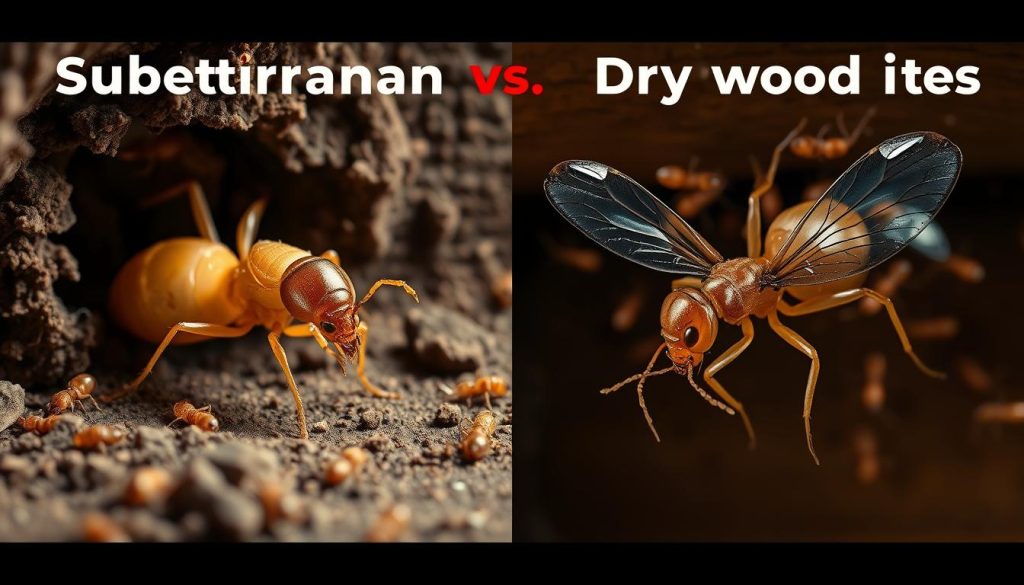
Subterranean Termites: Mud Tubes and Soil Contact
These pests build colonies underground, tunneling through soil to reach wood. They rely on mud tubes—clay-like trails on walls—to maintain moisture. A single colony can consume 2.5kg of wood weekly, weakening foundations silently.
- Nest locations: Soil, often near irrigation systems or leaky pipes.
- Damage pattern: Widespread, targeting structural beams and joints.
- Treatment: Soil barriers and bait stations disrupt their soil-to-wood pathways.
Drywood Termites: Frass and Internal Wood Damage
Unlike subterranean species, drywood pests live inside wood. They create tiny “kick holes” to eject frass—1.2mm pellets resembling sand. This internal wood damage often goes unnoticed until furniture or flooring collapses.
“A Palm Jumeirah client saved 60% on repairs after we detected frass in their teak cabinets. Early intervention prevented colony spread.”
| Feature | Subterranean Termites | Drywood Termites |
|---|---|---|
| Habitat | Soil-dependent | Wood-dwelling |
| Warning Signs | Mud tubes, swarmers | Frass, blistering paint |
| High-Risk Zones | Foundations, basements | Furniture, attics |
| Treatment | Liquid termiticides | Fumigation or heat |
Super Dream’s species-specific protocols address these differences. For subterranean types, we target moisture sources. Drywood cases require wood injections or tenting. Knowing which pest you’re facing saves time and money.
Auditory and Structural Clues
Your home might be communicating distress signals you’ve never noticed before. Subtle sounds and shifts in doors or walls often hint at hidden issues. Paying attention to these clues can prevent costly repairs.
Clicking Noises Inside Walls
Soldier termites bang their heads against tunnels to alert the colony—reaching 90dB, like a loud whisper. Professionals use stethoscopes or acoustic detectors to pinpoint activity. Key spots to check:
- Load-bearing walls: Vulnerable to hollowing from internal damage.
- Seasonal patterns: Noise peaks during mating seasons (March–May).
“Our vibration analysis at a Downtown Dubai high-rise detected activity behind gypsum walls. Early treatment saved the building’s structural integrity.”
Doors/Windows That Stick Suddenly
Just 0.5mm of warpage can jam doors. Unlike seasonal swelling, sudden sticking often signals moisture from pests. Test these areas:
- Door frames near wooden floors or walls.
- Windows with visible frass or bubbling paint.
Super Dream’s moisture meters differentiate between humidity and pest-related warping. Addressing the root cause early avoids irreversible structural damage.
Why Early Detection Matters in Dubai
Waiting to address pest problems in Dubai can turn minor issues into financial disasters. A 6-month delay multiplies repair costs by 400%, with costly structural damage often hidden behind walls. Dubai’s imported timber and gypsum boards are especially vulnerable, absorbing moisture that attracts destructive pests.
Most homeowners discover the problem too late. UAE insurers reject 68% of claims linked to wood pests, leaving families to cover expenses. Here’s how timelines impact budgets:
| Detection Time | Average Repair Cost (AED) | Insurance Coverage |
|---|---|---|
| 0–3 months | 2,500 | Partial (50%) |
| 6+ months | 10,000+ | None |
“A delayed inspection in Al Barsha cost a client AED 15,000 for beam replacements. Our free checkup would have spotted the issue for under AED 500.”
Dubai’s property market adds another layer of risk. Real estate regulations require pest-free certificates for sales. Undetected infestation can derail transactions or slash resale values by 20%.
- Prevention ROI: Annual inspections cost 1% of potential repair bills.
- Material risks: Teak and MDF attract pests faster than concrete or metal.
- Guarantee: Super Dream’s free inspections include moisture mapping and frass analysis.
Acting early isn’t just smart—it’s essential for protecting your investment in Dubai’s harsh climate.
Protecting Your Home from Termites
Smart home protection in Dubai starts with proactive defense strategies. Simple adjustments to moisture control and wood maintenance reduce risks by 60%, according to UAE pest studies. We’ll guide you through essential steps and when to call experts.
Moisture Control and Wood Maintenance
Dehumidifiers cut humidity levels below 50%, making areas less inviting. Install proper drainage around villas—slope soil away from foundations to prevent pooling.
For wood maintenance, use UAE-approved chemicals like Boracare or Timbor. These create protective barriers without harming finishes. Key application zones:
- Wooden beams: Treat joints and load-bearing sections annually.
- Furniture: Spray undersides of imported pieces every 6 months.
When to Call Super Dream Pest Control & Cleaning Services UAE
Our 4-step protection system includes inspection, bait stations (92% effective), targeted treatment, and follow-ups. Choose professional help if you notice:
- Persistent mud tubes or frass despite DIY efforts.
- Warped floors or doors that worsen within weeks.
“A client in JBR avoided AED 8,000 in repairs after our bait stations stopped colony expansion within 48 hours.”
For severe cases, Super Dream offers 5-year warranties on barrier systems. Our decision tree simplifies choices:
| Situation | Action |
|---|---|
| Single frass pile | DIY wood treatment |
| Multiple mud tubes | Professional pest control |
Act now—early prevention saves up to 70% on future repairs.
Conclusion
Timely action can prevent structural nightmares in UAE properties. Spotting mud tubes, discarded wings, or hollow wood early saves thousands in repairs. Dubai’s humidity and imported materials heighten risks.
Super Dream Pest Control offers 24/7 emergency response, with 90% of cases resolved in under 48 hours. Book a free inspection today using code DREAM10 for priority service.
Registered treatments include a 5-year warranty—your safeguard against hidden termite damage. Don’t wait until it’s too late; protect your home now.