Signs of Termite Infestation in Your UAE Home
Living in the UAE, we often focus on visible pests. A hidden danger can cause far more harm. Termites are silent destroyers, working 24/7 to consume wood in your property.
This destructive activity can go unnoticed for years. Most standard home insurance policies do not cover the resulting structural damage. This makes proactive discovery absolutely vital.
These pests are masters of stealth. They only need a tiny gap, as small as 1mm, to enter a building. Once inside, they feast silently on timber and other materials.
The financial impact of repairing termite damage can be immense. Annual checks by a licensed expert are your best defense. Companies like Super Dream Pest Control & Cleaning Services UAE specialize in these vital inspections.
This guide will equip you with the knowledge to spot early termite activity. Protecting your investment starts with knowing what to look for.
Discover the top Signs of Termite Infestation in Your Home with our guide. Contact Super Dream Pest Control & Cleaning Services UAE for expert help today.
Key Takeaways
- Termites are a silent, destructive threat that can remain hidden in a UAE home for many years.
- Standard home insurance often does not cover the significant structural damage caused by these pests.
- Termites can enter a building through gaps as tiny as 1mm, making prevention challenging.
- Annual professional termite inspections are crucial for early detection and can save thousands in repair costs.
- Early identification of termite activity is key to protecting your property’s value and safety.
- Super Dream Pest Control & Cleaning Services UAE is a recommended licensed provider for inspection and control services in the region.
Introduction: The Silent Threat to UAE Homes
Many homeowners in the Emirates are unaware of the silent invaders that can compromise their property’s safety. The UAE’s warm climate provides a perfect, year-round habitat for these pests. Modern construction methods sometimes use wood, creating an ideal food source.
Termites can live inside a structure for years without any obvious signs. They work in the shadows, consuming wood from the inside out. This hidden termite activity makes early detection a major challenge.

Two primary species threaten properties here. Drywood termites burrow directly into wooden beams and furniture. Subterranean termites operate from underground colonies, building mud tubes to reach their food.
Both types cause significant damage long before they are seen. The structural damage from their feeding can weaken critical supports. Repairing this termite damage is often very costly.
Understanding the enemy is the first step in protect home assets. The table below outlines the key differences between the two common termites found locally.
| Termite Type | Primary Habitat | Mode of Operation | Common Signs |
|---|---|---|---|
| Drywood Termites | Inside dry, sound wood (beams, furniture, framing) | Infest wood directly, creating internal galleries. They do not need contact with soil. | Fine, powdery droppings (frass), hollow-sounding timber, discarded wings. |
| Subterranean Termites | Underground colonies in soil | Build mud shelter tubes to travel between soil and wood. They require moisture. | Mud tubes on foundations, swarming winged ant-like insects, damaged wood with soil. |
This constant, hidden threat makes professional inspection non-negotiable. Companies like Super Dream Pest Control & Cleaning Services UAE possess deep local knowledge. They understand how these pests behave in our specific climate and areas.
Regular pest control checks are an essential part of smart home maintenance. They help identify a termite infestation at its earliest stages. This proactive approach can prevent termites cause catastrophic harm to your property.
Viewing termite control as routine care is the best defense. Don’t wait for visible signs of termite problems to appear. Act now to safeguard your biggest investment.
Top Visible Signs of a Termite Infestation
While termites work in secret, they occasionally leave behind clear, physical evidence of their presence. Learning to spot these warnings is your first line of defense. Two clues stand out as definitive proof of an active colony.
Mud Tubes: The Subterranean Highways
Look for pencil-thin, brown veins running up your foundation or walls. These are mud tubes. Subterranean termites build them from soil and saliva.
The tubes provide a moist, protected highway. They connect the underground colony to the wood in your property. This allows workers to travel safely.

You can perform a simple test. Break off a small section of a mud tube. Check it again in a few days. If the tunnel is rebuilt, you have active termites.
Swarmers and Discarded Wings: The Reproductive Signal
Watch for flying termites, or swarmers. A mature colony sends them out, usually in spring. Their job is to start new nests.
After swarming, they leave behind piles of tiny, translucent wings. These discarded wings often collect on windowsills or in spider webs. They resemble fish scales.
Swarmers are attracted to light sources. You might see them near doors windows or lamps. Finding them inside is a major red flag.
Many people confuse swarmers with flying ants. Correct identification is crucial. The table below highlights the key differences.
| Feature | Termite Swarmer | Flying Ant |
|---|---|---|
| Body Shape | Uniform, thick waist | Pinched, narrow waist |
| Antennae | Straight, bead-like | Elbowed |
| Wings | Two pairs of equal length | Front wings longer than hind wings |
| Primary Role | Reproduction; indicates a mature nest | Reproduction; does not necessarily indicate an indoor infestation |
Both mud tubes and swarmers signal an established, active infestation. This termite activity will cause significant damage if left untreated.
Do not ignore these warnings. Professional inspection and treatment are required. We recommend contacting Super Dream Pest Control & Cleaning Services UAE immediately for expert identification and a solution.
Structural and Internal Clues of Termite Activity
The most telling clues of a termite problem are often hidden within your home’s structure, revealed not by sight but by sound and touch. These internal warnings point directly to the damage happening behind your walls.
Ignoring them can lead to severe termite damage over years. Let’s explore two critical internal signs you must know.
Hollow-Sounding Wood and Frass (Termite Droppings)
Termites consume wood from the inside out. They leave only a thin outer shell. This creates hollow galleries where they live and eat.
You can detect this with a simple “tap test.” Use a screwdriver or knuckle to tap on baseboards, door frames, and wall studs.
- Solid, healthy timber produces a dull thud.
- Infested wood sounds hollow, empty, or papery.
- It may even crumble easily under pressure.
Another definitive clue is frass. This is the technical term for termite droppings. Drywood termites push these pellets out of their nests through tiny “kick-out” holes.
Frass often looks like small piles of sawdust, sand, or coffee grounds. It accumulates on floors, shelves, or in corners below infested areas.
“If you clean a suspicious pile and it reappears in the same spot within days, you’re likely looking at termite activity, not ordinary dust.”

It’s crucial to differentiate frass from other debris. True frass consists of uniform, six-sided pellets. Sawdust is more fibrous and irregular.
Finding hollow wood or frass means the infestation is advanced. The pests have been using your property as a food source for some time.
This requires immediate professional inspection. Experts from Super Dream Pest Control & Cleaning Services UAE can pinpoint the exact scope of the damage. They provide the correct treatment plan.
Stuck or Warped Doors and Windows
Do your doors and windows suddenly stick or fail to close smoothly? While humidity can cause this, termites are a more serious culprit.
As these pests tunnel through frames, they introduce moisture into the wood. This causes the timber to swell and warp. The resulting damage distorts the shape of the frame.
This structural issue is a silent alarm. It often mimics minor settling or climate effects. Many homeowners dismiss it, losing precious time.
If professional inspections rule out humidity, termites are the likely cause. This sign indicates the infestation is affecting your home‘s load-bearing structures.
Do not attempt DIY fixes. Forcing a stuck door can worsen hidden termite damage. The underlying pest problem must be solved first.
We strongly advise calling Super Dream Pest Control & Cleaning Services UAE at the first hint of warping. Their team has the tools to see inside your walls. They help you protect your home with expert control strategies.
Signs of Termite Infestation in Your Home: A Checklist
Don’t rely on chance. Use this tailored checklist during your regular home maintenance to catch infestations early.
We’ve compiled all the major warnings into one actionable tool. This list is designed for UAE properties, considering local architecture and common pest species.
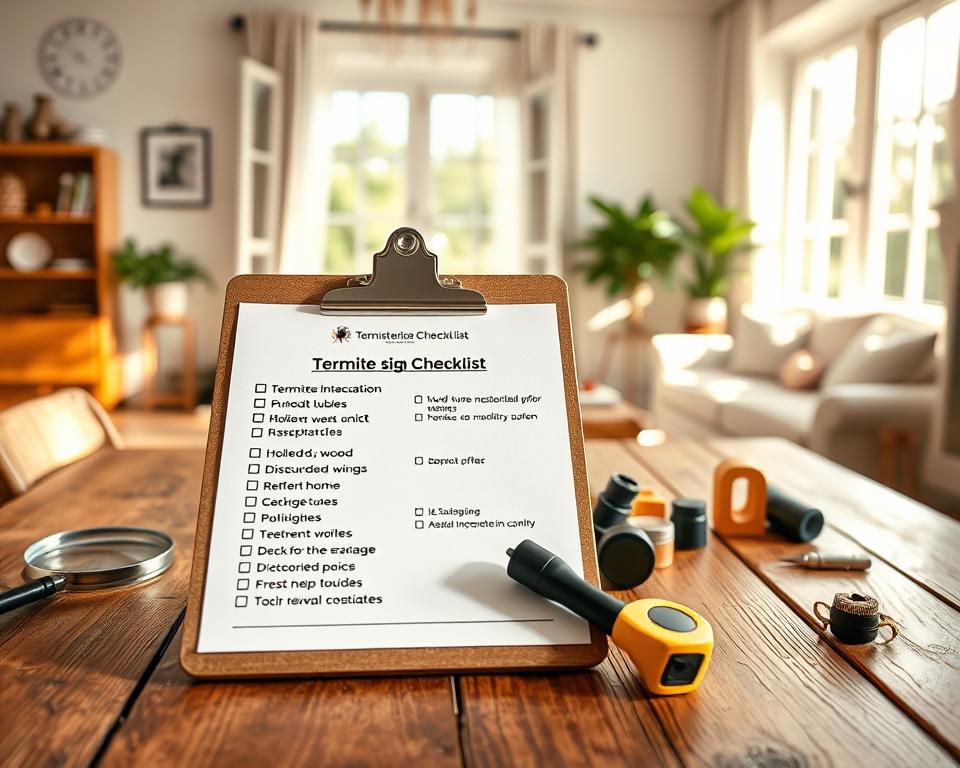
Go through it room by room, paying special attention to basements, attics, and where wood meets the ground. Checking off any single item means you need a professional inspection.
| Sign to Check For | What It Means |
|---|---|
| Mud Tubes on foundations or walls | Active subterranean termites are traveling from soil to wood in your property. |
| Piles of Discarded Wings on sills | Reproductive flying termites have swarmed and shed their wings indoors. |
| Hollow-Sounding Timber | Termites have eaten the wood from the inside out, leaving a thin shell. |
| Fine, Pellet-Like Frass | Drywood termites are actively feeding and leave behind their droppings. |
| Stuck or Warped Doors Windows | Moisture and tunneling within frames distort the wood, a sign of internal damage. |
| Bubbling or Peeling Paint | This can mimic water damage but is often caused by moisture from termite activity behind walls. |
| Buckling Wooden Floors | The subfloor may be compromised, leading to sagging or uneven surfaces. |
| Loose Tiles or Flooring | Underlying moisture from a termite infestation can break the adhesive bond. |
Finding any of these signs is a serious red flag. It indicates an active pest problem that will cause significant structural damage over time.
This checklist is your first step to protect home assets. Early detection can save you thousands in future repairs.
If you identify a potential sign, do not delay. Termite damage is progressive. What starts as minor can quickly become major significant damage.
We strongly recommend contacting the experts immediately. For a comprehensive assessment, schedule a control inspection with Super Dream Pest Control & Cleaning Services UAE.
Their local specialists understand the unique threats to termites home in the region. They provide the accurate identification and treatment plan you need.
Make this checklist part of your seasonal routine. Regular vigilance is the best way to guard your largest investment.
Secondary Indicators: Moisture and Surface Damage
Moisture is a key byproduct of a termite colony, and its effects can show up in surprising places around your property. These secondary clues are often mistaken for common household problems. Recognizing them is crucial for uncovering a hidden infestation.

When termites tunnel through walls and wood, they introduce moisture. This dampness then manifests on your home’s surfaces. Let’s examine the two most common surface-level signs.
Bubbling or Peeling Paint That Mimics Water Damage
Have you noticed paint bubbling or peeling on an interior wall? This often points to a plumbing leak. If no leak exists, termite activity could be the real culprit.
The pests need a moist environment. As they chew through drywall and framing, they release moisture into the cavities. This trapped dampness causes the paint to lose adhesion.
You might see discolored patches or blisters. In some cases, you may spot tiny, accidental pinholes in the drywall. These are chew-through points where worker termites broke the surface.
Do not dismiss this as simple condensation or settling. Unexplained paint damage is a major red flag. It suggests a colony is using your property as a food source behind the scenes.
Buckling Floors and Loose Tiles
Flooring issues are another telltale secondary indicator. Excess moisture from a hidden colony can warp wooden floorboards. They may buckle, cup, or become unusually squeaky.
The problem stems from the subfloor. Termite damage to support beams and joists compromises the structure. This allows moisture to accumulate and distort the materials above.
Tile floors are not immune. The same underlying moisture can loosen grout. Tiles may feel unstable or sound hollow when tapped. The adhesive bond fails due to the damp, compromised subfloor.
These flooring problems often develop over years. Homeowners might blame age or climate. A professional inspection is the only way to confirm the true cause.
Addressing these indicators termites early is vital. Ignoring them can cause significant structural damage. The table below summarizes these secondary warnings.
| Indicator | Primary Cause | Implication |
|---|---|---|
| Bubbling/Peeling Paint | Moisture released by termites inside wall cavities. | Active infestation within walls, likely near the affected areas. |
| Buckling Wood Floors | Warping from moisture and compromised subfloor supports. | Significant damage to floor joists and structural wood below. |
| Loose Tiles or Crumbling Grout | Failed adhesive due to a damp, damaged subfloor. | The infestation has likely progressed, affecting the foundational layers of your home. |
We strongly advise against diy fixes for these issues. The surface problem is just a symptom. The root pest problem must be solved first.
For accurate diagnosis, you need expert help. Super Dream Pest Control & Cleaning Services UAE specializes in moisture detection and termite-specific treatment. Their inspections can pinpoint the exact source of the damage.
Schedule a termite inspections at least once a year. This proactive control measure can save you from extensive repairs. Don’t let hidden activity leave behind a trail of costly damage.
Drywood vs. Subterranean Termites: Knowing Your Enemy
The battle against termites requires understanding two primary adversaries with distinct strategies. In the UAE, both drywood termites and subterranean termites are prevalent. Each species has unique biology and nesting habits that influence the signs they leave and the damage they cause.
Correct identification is the cornerstone of effective control. Using the wrong treatment method can waste time and money. It may also allow the infestation to spread further within your property.

We compare these pests below. This knowledge will help you interpret the clues they leave. It also underscores why professional inspection is non-negotiable.
- Drywood Termites: They establish their colony directly inside the wood they consume. They do not need contact with soil or external moisture sources.
- Subterranean Termites: These termites build massive underground nests. They require constant moisture and build distinctive mud tubes to reach above-ground food.
The local climate affects their behavior. UAE’s heat drives subterranean termites deeper for moisture. Drywood termites can thrive in attic spaces and dry structural timbers.
Signs of Drywood Termite Infestation
Since these termites live inside their food source, evidence is often subtle. Look for these specific indicators of an active colony.
Frass Piles: This is the most definitive sign. Drywood termites push out their pellet-like droppings from tiny kick-out holes. The piles resemble fine sawdust or coffee grounds.
True frass consists of uniform, six-sided granules. Finding it means termite activity is happening inside the wood at that location.
Smooth, Clean Galleries: If you break into infested wood, the interior will have smooth, clean tunnels. These galleries are carved along the wood grain. You will not find soil or mud inside.
Sagging Floors or Ceilings: As the internal support beams are eaten, structural elements can sag. This often mimics water damage. It indicates significant damage over many years.
Discarded Wings: Reproductive swarmers emerge directly from infested wood. After a brief flight, they shed their wings. Look for small piles of these translucent wings on floors or sills.
These pests can infest furniture, picture frames, and attic rafters. They are a major threat to protect home assets like wooden decor.
Signs of Subterranean Termite Infestation
This species operates from a central underground nest. Their signs termite problems are more external and connected to the soil.
Mud Tubes: These are the hallmark evidence. The termites build pencil-thin tunnels of soil and saliva. You’ll find them on foundation walls, piers, or in crawl spaces.
“Active mud tubes are a highway for the colony. Breaking one and seeing it rebuilt within days confirms live termite activity.”
Swarmers Emerging from Soil: Reproductive flying termites (swarmers) often emerge from the ground near the foundation. In the UAE, Formosan termites, a aggressive subterranean type, may swarm at dusk.
Damage in Wood Contacting Soil: Check where wooden structures meet the ground. This includes fence posts, door frames, and deck supports. The wood may sound hollow and contain traces of soil.
Discarded Wings are also common with subterranean swarms. They often collect in spider webs or on windowsills. This is a key signs termite infestation is mature and reproducing.
These termites cause rapid, extensive structural damage. Their large colonies can consume wood 24/7.
Identifying the correct type is crucial. A diy approach often fails because treatments differ radically. Drywood infestations may require localized wood injection or fumigation. Subterranean colonies need soil treatment and baiting systems.
This is where expert help is vital. Super Dream Pest Control & Cleaning Services UAE are specialists in accurate species identification. Their technicians understand how both pests behave in our local areas.
They perform thorough termite inspections to find the nest. Then, they create a tailored treatment plan. This professional control stops the infestation and prevents future ones.
We recommend annual inspections by their team. Catching termites early can cause significant savings on repairs. Knowing your enemy is the first step to protect home from these silent destroyers.
What to Do If You Spot Signs of Termites
Discovering potential termite evidence can be alarming. A calm, systematic response is crucial.
Your first actions set the stage for effective pest control. Follow these immediate steps to protect home integrity.
- Do not disturb the area. Avoid poking into mud tubes or clearing frass piles. This can cause the colony to relocate deeper into your property.
- Avoid DIY treatments. Store-bought sprays are ineffective against hidden termites. They often worsen the problem by scattering the colony.
- Document what you see. Take clear photos of any signs, like discarded wings or damaged wood. This helps the professional during their inspection.
- Stop Googling and start calling. It’s time to contact a licensed pest control expert immediately.
Professional help is not a luxury. It is essential for dealing with these complex pests.
Termites live in vast, hidden colonies. Improper treatment can push them into new areas of your home. This leads to more extensive structural damage.
Only a trained technician has the tools and knowledge for complete eradication.
What to Expect During a Professional Inspection
A licensed expert will conduct a thorough termite inspection of your property. This process is detailed and methodical.
They will examine every potential hotspot. This includes foundations, crawl spaces, attics, and where wood contacts soil.
The goal is to identify the termite species and locate the nest. They also assess the extent of any existing damage.
“A proper inspection doesn’t just look for live termite activity. It evaluates conditions that attract them, like moisture issues and food sources.”
You will receive a clear report explaining their findings. This report outlines the recommended treatment plan and associated costs.
Professional Treatment Options
Experts choose a strategy based on the infestation type and severity. Common solutions include:
- Liquid Termiticides: These create a protective barrier in the soil around your home. They eliminate termites on contact and provide long-term prevention.
- Baiting Systems: Stations are placed in the ground around the property. They contain a slow-acting bait that worker termites carry back to the colony, eliminating it.
- Wood Treatment and Fumigation: For severe drywood infestations, direct wood injections or whole-structure fumigation may be necessary.
The right method stops current termite activity and prevents future problems.
The Critical Importance of Ongoing Monitoring
Effective control does not end with one treatment. Termites can return if conditions are favorable.
Professionals install monitoring devices as part of their service. They schedule follow-up inspections, typically every year.
This ongoing vigilance is your best long-term defense. It ensures your home remains protected for years to come.
Delaying action has a direct cost. Termites cause more significant damage the longer they feast. Early professional intervention saves thousands in repairs.
| Action | DIY Approach | Professional Solution |
|---|---|---|
| Identification | Often incorrect; confuses termites with ants. | Accurate species identification by a trained expert. |
| Treatment Scope | Surface-level; misses the main colony. | Targets the entire colony, including hidden nests. |
| Long-Term Protection | None; problem typically recurs. | Includes warranties, monitoring, and preventive barriers. |
| Cost Over Time | Repeated, ineffective spending plus repair bills. | One-time comprehensive solution that protect home value. |
We strongly advise contacting Super Dream Pest Control & Cleaning Services UAE immediately.
Their local expertise is unmatched. They understand UAE-specific termite behavior and building styles.
Their licensed technicians provide effective, tailored treatment plans. They offer the peace of mind that your property is in expert hands.
Do not wait. Schedule a free, no-obligation termite inspection and quote today. Professional intervention can effectively eliminate these pests and safeguard your biggest investment.
Call Super Dream Pest Control & Cleaning Services UAE now. Let their experts provide the help you need to secure your home.
Conclusion
Protecting your property from unseen threats requires both knowledge and proactive measures. This guide has equipped you to spot the subtle clues of termite activity.
Remember, these pests are silent destroyers. Standard insurance rarely covers the resulting structural damage. This makes prevention and early detection financially critical.
Annual professional termite inspection is your best defense. It can find termites early and save thousands in repair costs. We recommend Super Dream Pest Control & Cleaning Services UAE for expert pest control.
Use the provided checklist. Do not ignore minor signs. With professional help, infestations can be controlled and prevented.
Take action today to protect home value and safety. Contact the experts for peace of mind and a comprehensive treatment plan.